
Antigua Global Explorers Review: Our Family’s Experience
Thompsons vs the World contains affiliate links and is a member of the Amazon Services LLC Affiliates Program. Making a booking via these links will mean that we receive a small fee but this is at absolutely no cost to you. The price you pay will always remain the same. For more information please see our Privacy Policy.
One of the things we learned very quickly on our family gap year was that our children – and us – needed community, at least for some of the time we were away. Travelling around and experiencing so many amazing things is wonderful, but after a while on the road kids and us adults alike absolutely needed some kind of community around us. Our kids were clearly craving other kids on their wavelength to hang out with after a few weeks as just a family. The depth of my Minecraft knowledge is just not enough to sustain a 10-year-old for that long!
When we decided to hit the road again for a few months earlier this year, our first priority was finding the right worldschooling hub for our boys that we could build our trip around. Our boys are at an age now (10 and 12 years) that they REALLY want to make friends when we’re on longer trips overseas. We knew we didn’t want to enrol them in a formal school setting but wanted something with some structure to balance out the other months of pure, unstructured travel.
And so, after a LOT of careful research we opted to enrol both boys at Antigua Global Explorers for the whole month of July 2026. It ticked many of the boxes for us – we’d been interested in experiencing worldschooling in Guatemala for a while but had never visited the country before, we’d seen many positive reviews from other worldschooling families, we specifically wanted a drop-off hub to foster more independence (not the kind of worldschooling hub where the adults are still there throughout) and we liked to idea that the boys might also be able to learn some Spanish during their time there.
But did it live up to the hype? Was it actually a good fit for our family? And what did we wish we’d known before we arrived?
If you’re deep in the research phase of trip planning and trying to find exactly the right worldschooling hub for your family (and I know how deep that research planning can go and just how much choice there is out there in terms of hubs, I’ve been there), then our Antigua Global Explorers review will give you all the key information you need, including our family’s honest experience of spending a month at the hub, what to expect and the kinds of families and children likely to get the most out of it.
At a Glance: Antigua Global Explorers
All the basic info you need to know about Antigua Global Explorers worldschooling hub:
📍Location: Finca La Azotea (coffee farm), Antigua, Guatemala
📆Programme dates: Year-round in four week blocks, with a week’s break between sessions.
⏱️Daily timings: 9am-1pm, with optional additional Spanish lessons from 1-2pm
🚸Ages: 2-12 years. Our boys were 10 and 12 years old when they attended. AGE also runs a Teens Hub (for ages 13-16years) in the afternoons at certain times of the year.
📖 Language: Activities and instructions are in English but Spanish is also widely spoken
💵 Costs: $850 per month per child, $500 for two weeks, $300 for one week or $75 daily (correct for 2026)
🇬🇹 Our experience: Our two boys – aged 10 and 12 – attended for four weeks in July 2026
☺️Our verdict (in one sentence): Fantastic drop-off hub run with real passion by the owners, in a gorgeous setting at Finca La Azotea that works for kids and parents.
What is Antigua Global Explorers and how does it work?
Antigua Global Explorers is a drop-off worldschooling hub just outside the centre of Antigua, Guatemala. Based on a large working coffee farm, it’s a beautiful outdoors educational space that has been thoughtfully constructed to work for younger and older kids alike.
You can enrol your kids here for anything from daily to one week or even up to three months at a time (under their new Founders Programme that opened in late 2026).
Whilst there is a huge amount of educational content weaved in to the activities, this is NOT a rigorous academic programme to replace formal schooling. There are no Maths, Science or History lessons to sit down to here. Instead topics are integrated in to the activities and field trips.
And there is a LOT of free choice. There are whole camp activities (such as learning about volcanoes, mini-Olympics and building campfires) but there is also plenty of time where kids can choose for themselves.
What a typical day looks like
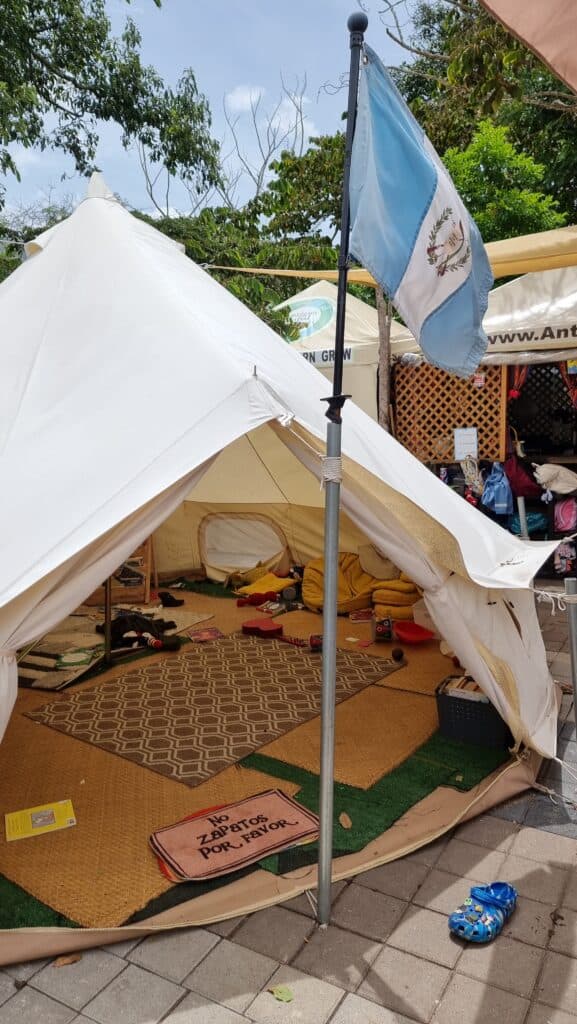
Drop off at the hub is at 9am each morning. The kids can store their backpacks and water bottles by the hub kitchen before kicking a football about, reading in the tipi or doing a bit of drawing before Circle Time.
Twice a week Julio also organises a run through the finca for kids and parents alike (which takes around 30mins and is actually pretty challenging!).
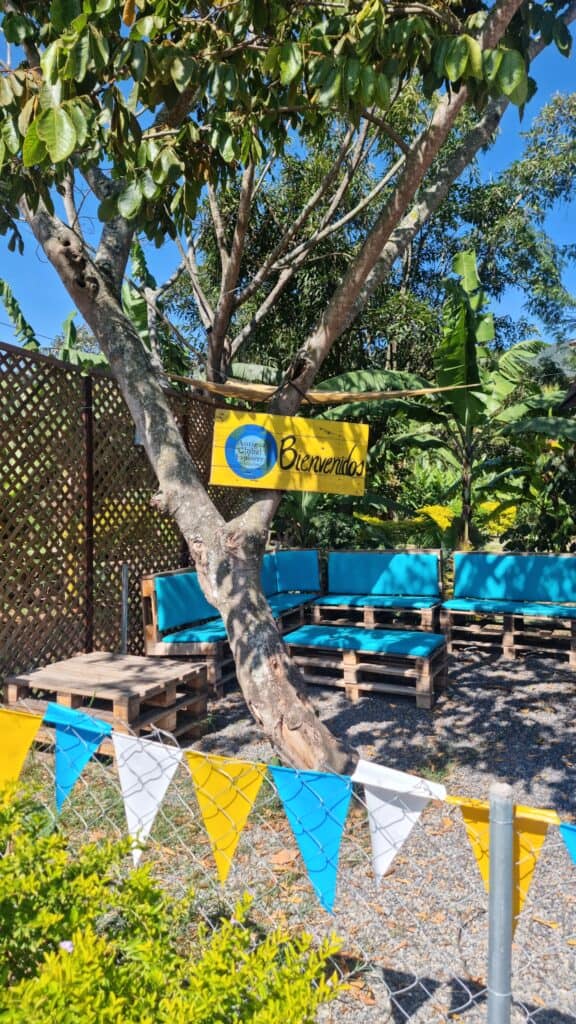
At 9.30am Circle Time starts on the wooden tree stumps amongst the greenery outside. Gabi and the staff go through the planned activities for the day, check in with the kids and answer any questions any of them have before the day begins. This is the point at which most parents depart (although those with younger kids or kids who are just settling in often stay for longer).
There’s then time for free choice play, including the range of activities that Gabi and the team have set up for the day. These include crafts, music, dance – all with a focus on Guatemalan culture.
There’s a snack break mid-morning, which is always healthy and usually fruit based (such as bananas or strawberries with honey). And then the kids can either carry on with the pre-set activities for the day or choose their own option such as football or den building.
On certain days there are whole camp activities in the late morning, such as mini-Olympics (a range of very fun games and team challenges) or camp out (putting up tents and building campfires).
Just before 1pm there is a final Circle Time of the day for everyone when the staff do a little debrief on the day and the plans for tomorrow.
From 1-2pm parents can opt to enrol their children in Spanish lessons, either as part of a small group or one-to-one. This is by no means compulsory and there is a very flexible approach – kids can attend every day or just a couple of days a week, and if you have plans one afternoon then lessons can be moved around. In reality when we were there around 50-60% of the kids seemed to stay on for the Spanish lessons each day.
Structured activities vs free play
One of the very best things about Antigua Global Explorers is the sheer volume of activities they have on offer, and how they empower the children to make their own choices whilst also weaving so much educational content in to each day.
The more structured, planned out activities that the team had set up while we were there included:
- Pinata making
- Preparing infusions with native plants
- Setting up a beauty salon
- Printmaking
- Jade workshop
- Making Guatemalan worry dolls
- Learning to weave
- Dance lessons
- Making Guatemalan chuchitos
- Learning to play traditional Guatemalan musical instruments
- Making Guatemalan candies
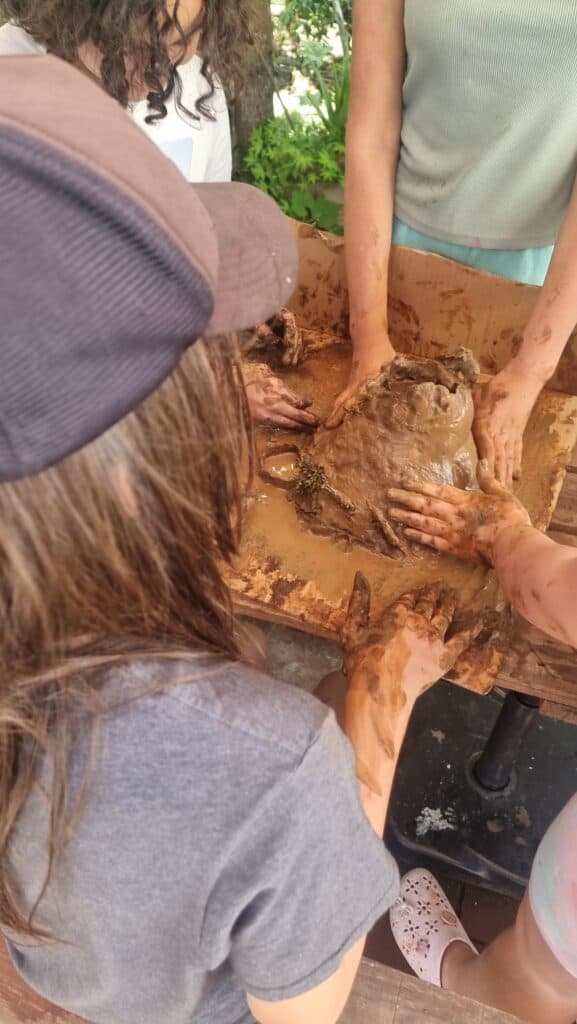
- Making clay volcanoes
- Yoga classes
- Nature scavenger hunts
Kids can absolutely choose whether they want to engage in these or not.
Alternatively the kids can sit with staff for some informal Spanish lessons (all taught through play). There are also a variety of other activities and free play areas that are available every single day for them to engage in, such as:
- On-going games of football
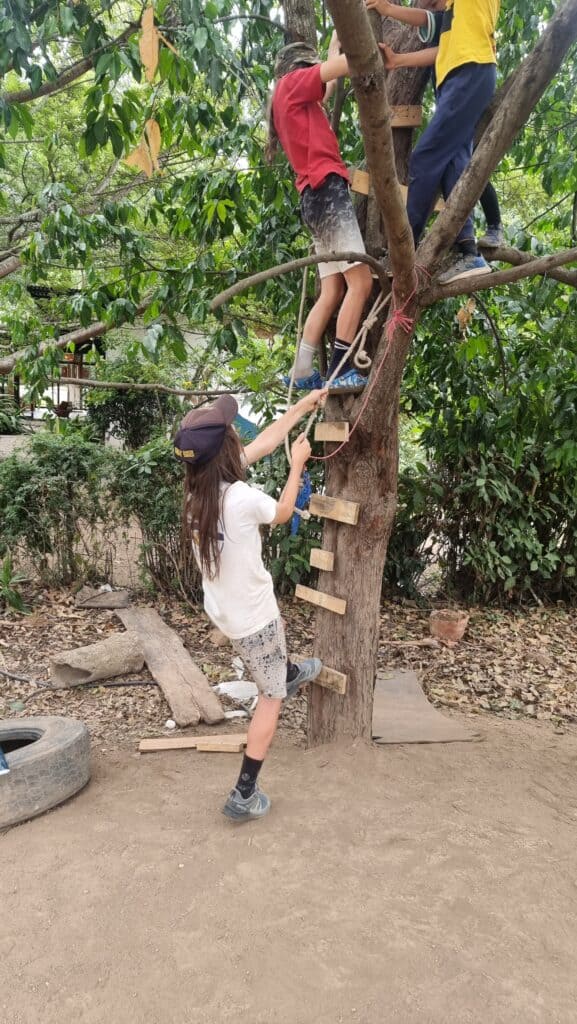
- Tree climbing
- Den building
- Reading in the library tipi
- Drawing
- Basic crafts
- Bike rides around the finca
Our 12-year old engaged with some of the activities that were on offer but he also just found a gang of like-minded kids and happily played HOURS of football. And our 10-year-old was similar, except he loved taking the hub’s bikes out for rides around the Finca with his little crew of friends.
Yes, I would have liked my two to have shown a bit more interest in the crafting sessions but ultimately we wanted a space where they could follow their own interests and make their own choices, and they were certainly able to do this.
Activities by age group
Each of the structured activities is set up to engage kids of all ages. There are simpler versions supported by staff for the younger children and then more complex options with more of a focus on independent learning for the oldest in the group.
And whilst the younger children are supervised throughout, the older children enjoy a bit more independence and can explore the Finca more widely on bike or on foot, as long as they are in a small group and staff are aware of their plans.
We really felt that this freedom benefitted our boys due to their ages (10 and 12 years old). They were able to make their own decisions and play and explore independently, which was something as parents we were keen to encourage them to do.
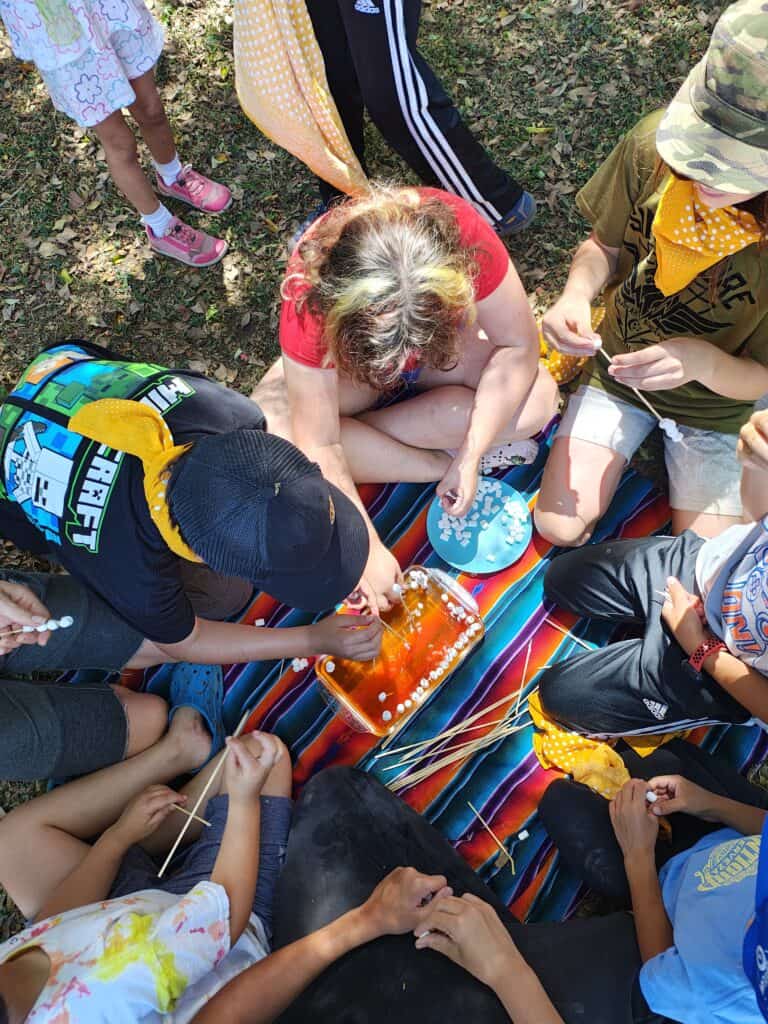
Cultural experiences and field trips
Every week that the hub runs there is a field trip on one of the days (included in the enrolment fees). This is such a wonderful addition as it gets the kids out and about and experiencing Guatemalan culture – our boys always looked forward to the Thursday days out!
During our time there Gabi and the team organised field trips to:
- A local ecologist, where the kids could see and handle animals such as snakes, chinchillas and lizards
- a little local tortilla-making place outside Antigua where the kids could join in and make their own
- A local chocolate-making workshop
- an artisan workshop where the kids were able to learn about traditional techniques for making their own clay figurines
- A neighbouring Guatemalan school
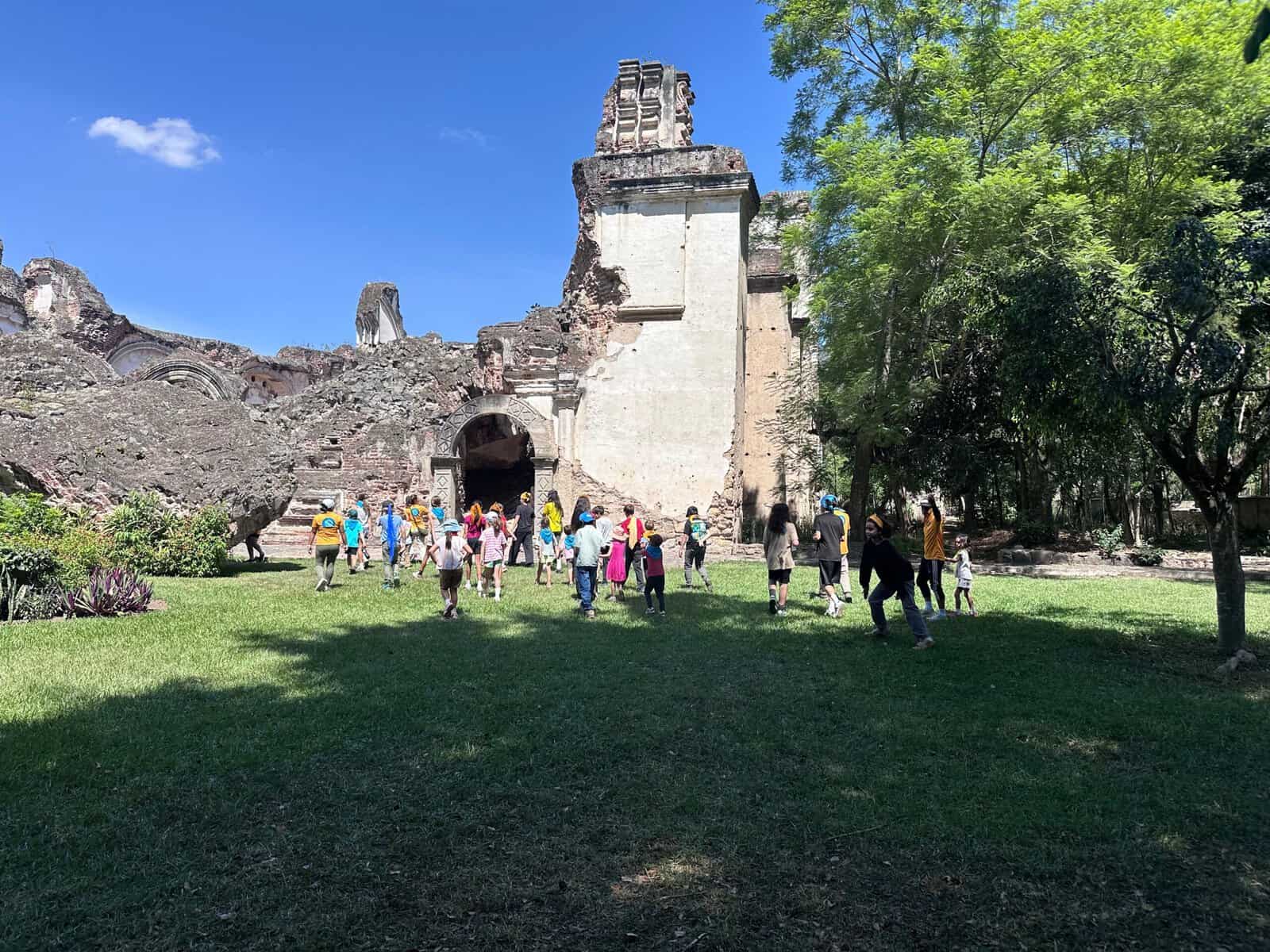
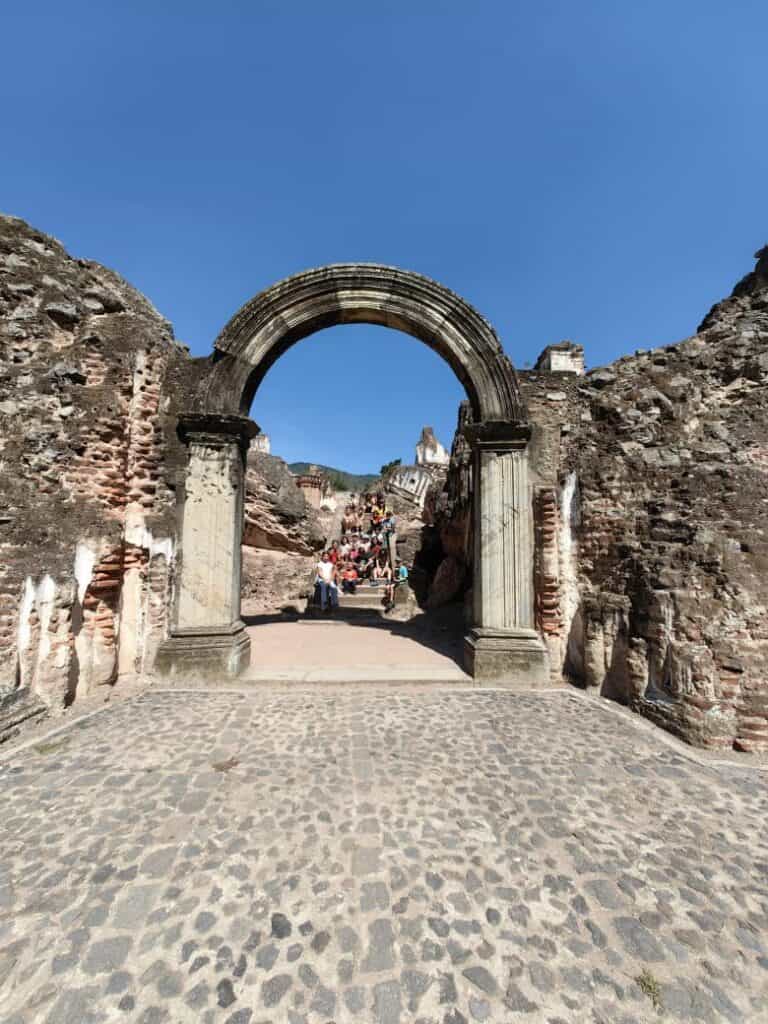
- Ruinas de la Recoleccion, where the kids could spend the day exploring ruins of the monastery which was devastated by earthquakes in the 1700s.
And one of the best things about the hub’s field trips were that parents were welcome to attend too (sometimes for a small additional fee to the place that was hosting). This was such a wonderful way to discover new experiences and meet local Guatemalans that we might not have had the chance to do in the same way on our own.
Our boys STILL talk about playing hide and seek amongst the epic ruins and getting to hold a giant snake at the foot of the volcano.
Market Day
If you asked our boys what their absolute favourite day at the worldschooling hub was, they would 100% opt for Market Day. It has almost legendary status amongst the kids, who wait all month for it to roll around.
Market Day is the day when the kids can spend all the Gabi Bucks that they have accumulated over their time at the hub. Gabi Bucks are handed out whenever kids engage in activities or demonstrate positive behaviour in any way. Each day they are counted and added to each child’s account. And on the very last day of the hub they get to go crazy and spend them all at once at the hub market!
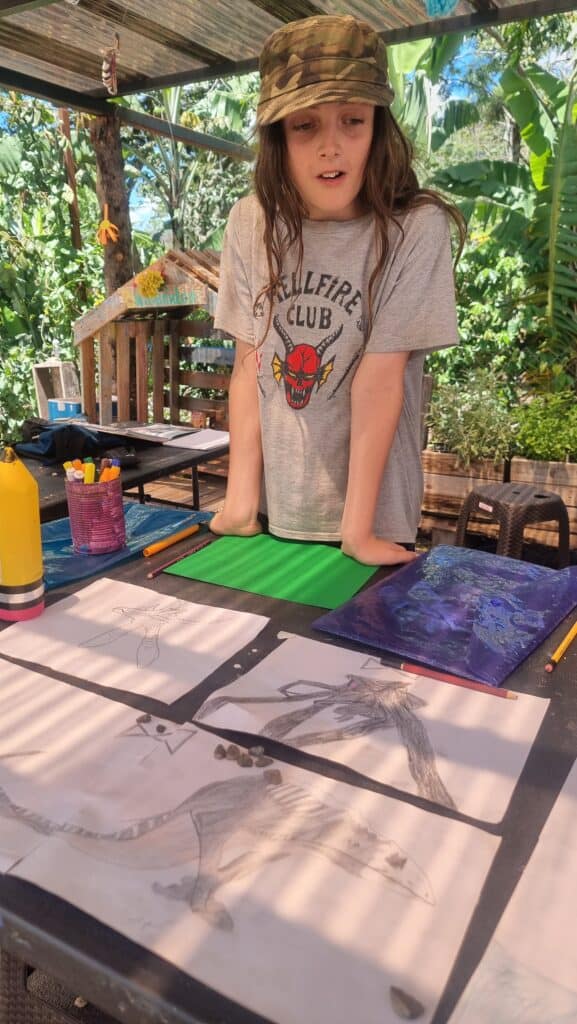
Whilst Gabi and her team stock up a couple of the stalls at the hub with traditional Guatemalan souvenirs (thankfully all small enough to fit in to backpacks and cases for the way home!) the vast majority of the stalls are run by the kids themselves. Our boys spent all week pouring their creative souls in to drawings to sell (even getting up at 6.30am on the day of the market to get a couple more done each!). They well so incredibly proud when they sold out completely.
Other kids made bracelets, bookmarks or baked goods. And then at the end there is a pot luck style feast for all the families to enjoy, which was a really lovely way to bring everyone together one last time.
What did my children think of the worldschooling hub?
We’ve attended a few different worldschooling hubs around the world, particularly on our family gap year; whilst we’ve been lucky that they have all been incredibly well-run, welcoming experiences the boys have had mixed feelings about them. Sometimes there just aren’t any kids their age or with similar interests, and sometimes they just don’t really want to engage with the kinds of activities on offer.
This was absolutely not the case at Antigua Global Explorers. In fact we are now regularly asked when we plan to go back, they are so keen to book in another stay!
What each of my children enjoyed most
As the boys were at the older end of the age group for Antigua Global Explorers, they very much enjoyed the free play ethos and the independence to make their own decisions on how they wanted to spend their time.
And whilst they very much enjoyed the more physical activities – particularly playing endless football and riding bikes – they also really loved the field trips, the whole camp activities (the mini Olympics and the Camp-out were particular favourites) and their absolute favourite day – Market Day.
Our youngest, whilst sociable, also really values quiet time to himself either drawing or reading – so he really benefited from the quiet little library tipi and the all-day access to drawing supplies so he could duck out of the louder activities at times and read or draw for a while.
How they settled in and made friends
I was more worried in advance about our 12-year-old; as he was right at the top of the age range for the main Antigua Global Explorers hub (and fairly mature) I thought that maybe he might find the activities a bit too ‘young’ and/or not have many kids on his wavelength to connect with. In reality the global language of football kicked in and he made fast firm friends with a gang of kids his age on the very first day.
For my 10-year-old the settling in process took a little bit longer. Whilst there were plenty of kids his age he struggled to make friends on the first couple of days of the hub. However, this was where living in Barrio de Antonelli really helped (more on this below). There were several kids from the hub staying there (including three right next door!) and over the course of a few evenings he played out with them and started building his own friendships.
Gabi and the team realised he was quiet over the first few days and were really great at keeping an eye on him and making sure he was included in activities and introduced to as many kids as possible. By about mid-way through the second week he was right at home and totally settled with a little gang of friends.
What surprised us about their experience
One of the very best surprises for us was just how many kids there were enrolled at the hub during our stay – and the big age range. There were around 30 kids enrolled during the month of our stay – which meant plenty of kids of all ages for them to make friends with.
The setting and location in Antigua Guatemala
One of the things we were particularly excited about when choosing Antigua Global Explorers was the opportunity to experience worldschooling in Guatemala. We’d never visited the country before, and spending a month in Antigua gave us the chance to get to know somewhere new while the boys settled into a routine and made friends at the hub.
And we did all absolutely fall in love with Antigua. Plus the setting for the actual hub is a dream – close enough to the centre of Antigua to make it easy to get to and from, but feeling like a world away from real life.
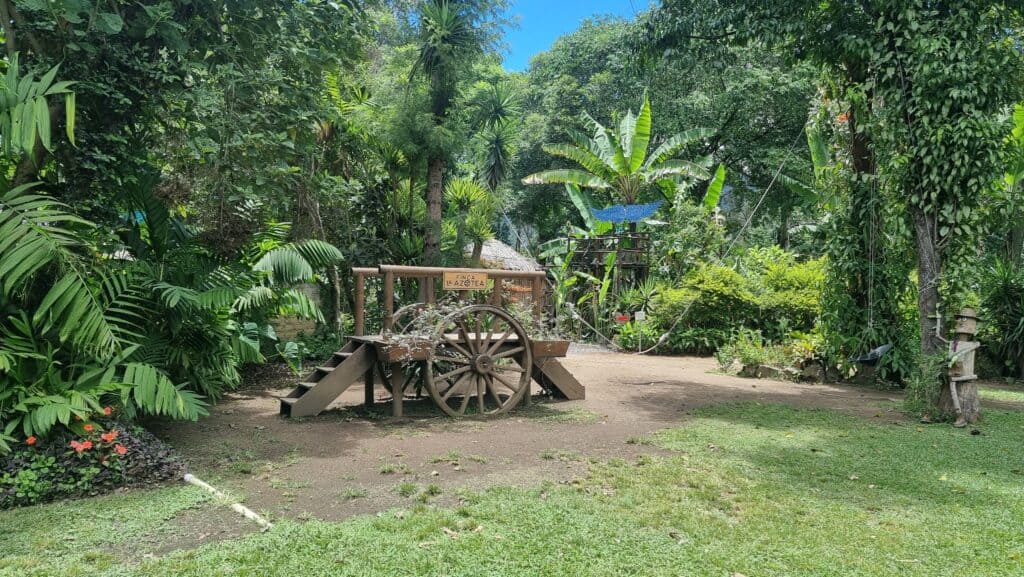
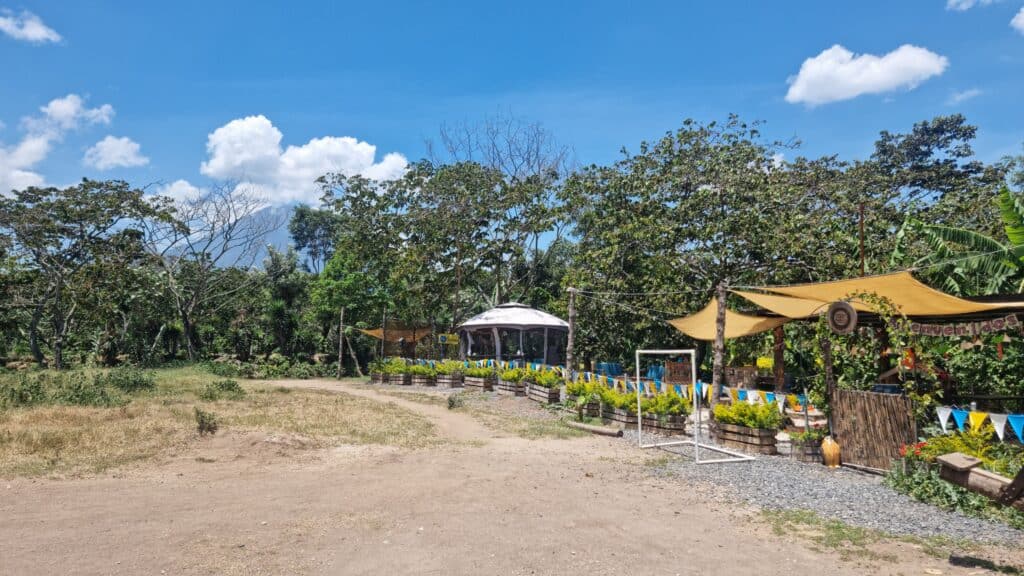
Finca La Azotea is gorgeous. It’s a sprawling working coffee farm packed full of lush greenery and little hidden spots to explore. As well as the hub space there’s two cafes, a restaurant, mini golf, hammocks, a little museum, playgrounds, fishponds, swings, a wellness centre, bike hire and horse-riding on site. Even without attending the hub it’s a whole day out in itself.
What the setting is like for children
The sheer space that the hub has makes it a wonderful experience for kids. The entire hub is open air, with a fenced, undercover section for activities, a tipi library, an outdoor circle space, dens in the undergrowth, ropes, swings and trees to climb, a football field and it’s own kitchen area for staff to prepare snacks and lunch (and where they run the cooking activities from).
And then there is the wider coffee farm to explore. Staff take kids off on scavenger hunts and little walks to explore the farm together, and older kids can take the hub’s bikes out and about too. They also visit the museum and the little music workshop on site.
Because there is so much space for the kids to roam, it really makes the hub work for such a range of ages and types of kids. There’s plenty of space for them to run around and be loud – they can build dens, play in the trees or kick a football around to their heart’s content. But if they are the kind of kids who appreciate more low-key, quieter activities then these are set up in the covered area away from the sports and games. Plus there is the library tipi where kids can escape to read a book or find a new fancy dress outfit to try on.
Why Antigua works so well for families
Antigua as a home base is also a great pick for a family stay. Our boys are not really fans of big towns and cities so I wondered how they might take to Antigua. But whilst there are busy parts of town, it never felt like a heaving, bustling city. It’s that wonderful balance between big enough to have plenty to keep you entertained but small enough to be able to, for the most part, navigate on foot.
The cobbled streets – whilst very lovely architecturally – also mean that traffic travels very slowly, which gives even the centre a safe feeling when you’re wandering with kids.
The various ruins are mostly open to the public and the kids are allowed to scramble over them and properly explore. There’s chocolate workshops, boardgame cafes, volcanoes for family hiking, swimming pools tucked away in courtyards and even a cat cafe. There are also huge wooded outdoor garden pubs (such as El Bosque and Caoba Farms) where whole families gather in the evenings and on weekends, with bouncy castles, playgrounds and pizza for the kids and the chance for an adult conversation over a cold drink or a coffee for the parents.
And from a practical perspective, Antigua has international supermarkets (where you can find European/US snacks for even the fussiest eaters), several private health centres, pharmacies and readily available Ubers. From the international airport in Guatemala City the transfer to Antigua takes around 1-1.5hours, so it’s also very easily accessible.
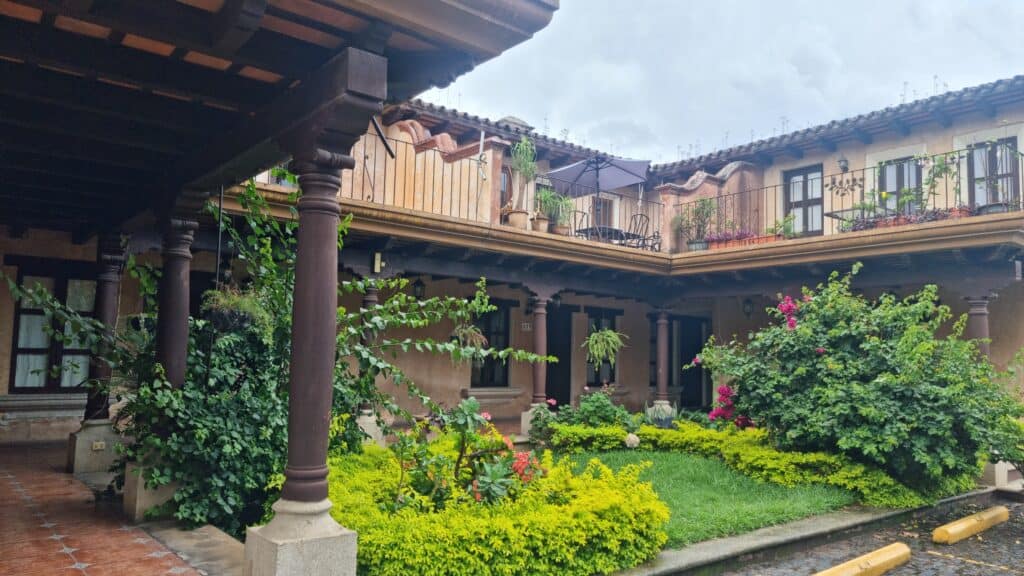
Where do people live in Antigua while their kids attend the hub?
Many families base themselves in the Barrio de Antonelli complex towards the South of the city centre. Which is exactly what we chose to do.
Barrio de Antonelli is a gorgeous little gated community that feels almost like a film set. It’s got a range of townhouse style homes, apartments and lofts available for rent all set around communal courtyards with shady little picnic benches and manicured greenery. Plus there’s a little kids playground tucked away inside too.
But the biggest thing we loved about living here was the sense of community. Not only are there usually plenty of other families here with kids enrolled at Antigua Global Explorers but there’s also a very welcoming permanent community of families too. On our first weekend here the boys were immediately invited round to someone’s house for a cinema night in their garage, complete with popcorn, snacks and drinks.
The kids could play out in the evenings for hours; in fact, ours were always keen to get home from the hub to pick games up where they had left off at the end of the hub.
Barrio de Antonelli is around a 15-20min taxi ride from the hub. The surrounding area feels very safe and there is a huge international supermarket within a shopping complex a short walk from the community. You can find Airbnbs that are located within the complex (this was our fabulous loft apartment) or the Antigua Global Explorers team can put you in touch with local contacts who have a number of houses and apartments for rent there.
Several families also stayed in B&Bs in the town centre itself; from here it’s an easy walk to the hub. One particular favourite that several families stayed in was Apartamentos los Nazarenos, with it’s own little pool and hot tub and access to cooking facilities.
And if you would prefer to be as close as possible, then Jocotenango, a neighbourhood to the North of Antigua is also an option. We visited several families who stayed in the Condominio Jardinez La Azotea gated complex of houses and apartments, which is a very short walk from the Northern entrance to Finca de la Azotea where the hub is based. There are a number of Airbnbs in the complex.
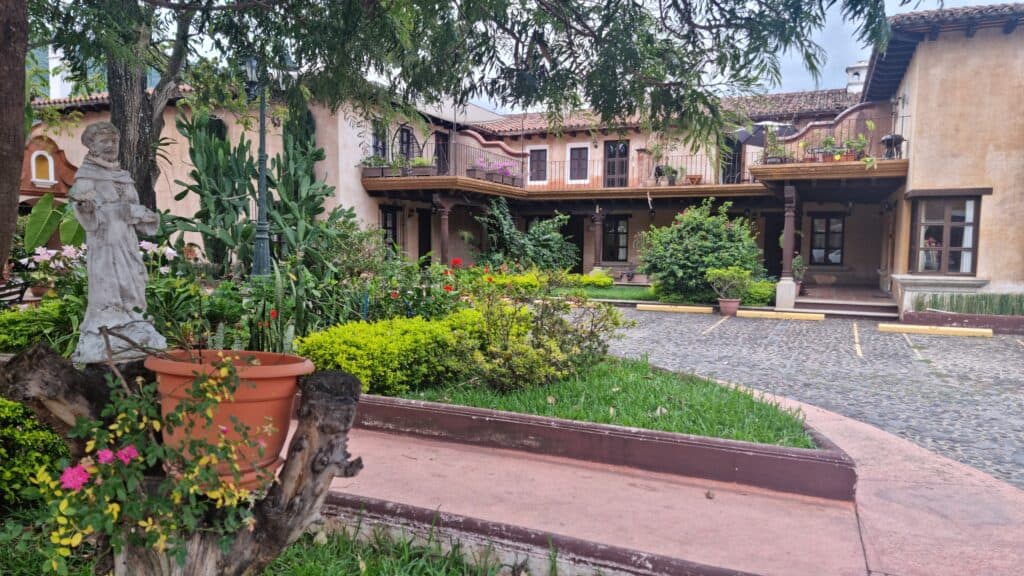
Did the worldschooling hub help us build community?
One of the things I wasn’t expecting was the real sense of community around each month of the hub. Whilst we’ve attended worldschooling hubs before, this was our first drop-off hub. As I knew we’d be dropping the boys off and leaving them there, I didn’t expect to actually build up such good friendships with the other parents.
But AGE’s structure and location make it easy to connect with other parents. For a start the WhatsApp group for each month is very active and the AGE team do a great job at bringing people together through this and via the opportunities they create for parents to join (such as the bi-weekly Running Club in the mornings and the chance to tag along on field trips).
But also the glorious setting at Finca La Azotea also makes a HUGE difference. After drop off we found that many of the families stayed at the outdoor cafe to either work or just hang out. This meant there was plenty of time to get to know the other parents.
During our stay there were also outdoor yoga classes at the Finca three times a week for parents, which were a wonderful way to spend part of the morning.
Opportunities to socialise outside the programme
Within a short time we found that there were always families around to socialise with outside the hub. Families would meet at cafes and bars with playgrounds and outdoor space over the weekends or in the evenings or organise to do a bit of sightseeing together.
We hiked Pacaya Volcano with another family we’d met at the hub, Steve hiked up Acatenango Volcano with a group of fellow parents, I organised a book club for the month, a group of parents and kids went to a local football game and there was frequent hanging out at each others houses and apartments in the evenings.
And many of these friendships – both for the kids and the adults – are still going strong, across oceans and continents!
How much does Antigua Global Explorers cost?
We paid a total of $850 per child for a month’s enrolment at Antigua Global Explorers.
This enrolment fee covered:
- Attendance at the hub between 9am-1pm, Monday to Friday
- All activities, access to any equipment including bikes/sporting gear/crafty things
- Mid-morning snacks and drinks
- Lunch and drinks
- Filtered drinking water available throughout the morning
- All scheduled field trips (usually one per week)
As you’d expect, the monthly enrolment fees works out as a cheaper rate per day than the weekly enrolment ($42.50 vs $60 per day). So the longer the kids can attend for, the better value it gets!
Transport to/from the hub
As families base themselves in different areas of Antigua, you will need to arrange and pay for transport separately. From our apartment in Barrio de Antonelli we paid around US$4.50 each way for an Uber. Whilst we took an Uber every morning, in the afternoons we would often wander in to the centre of Antigua after the hub and then gradually walk back home later in the afternoon/evening (without the need for an Uber at all).
Ubers are plentiful and usually arrive in a couple of minutes.
If you’re staying closer to the North of Antigua or in Jocotenango you will be able to walk to and from the hub each day.
Accommodation costs
Compared to much of the rest of Central America (and the rest of Guatemala), Antigua is relatively expensive in terms of accommodation.
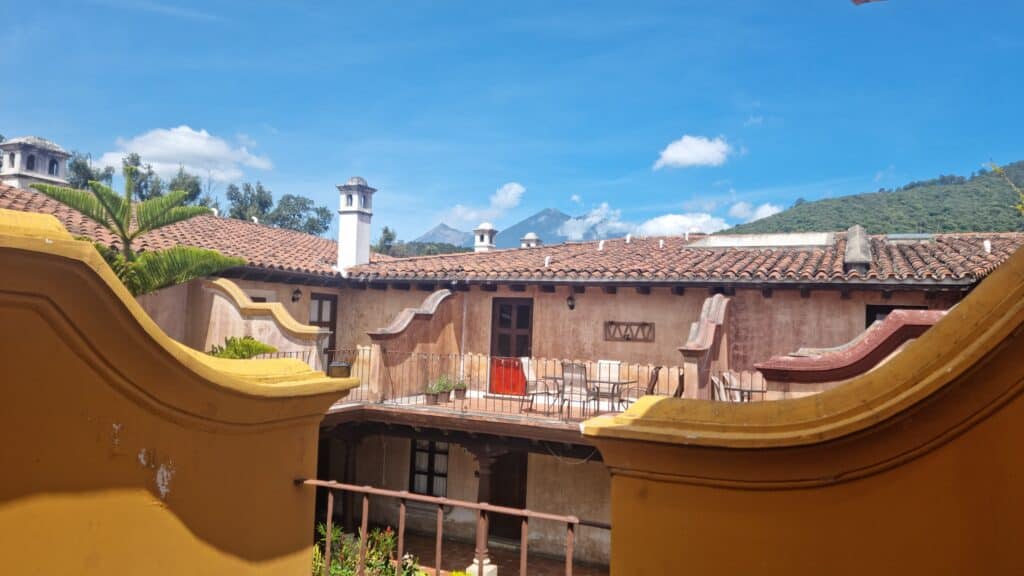
We paid $2,150 for one month in our two-storey loft apartment within Barrio de Antonelli, which slept up to 6. We absolutely LOVED our apartment, with it’s soaring ceilings, gorgeous furniture and decor and corner balcony with views out over Acatenango and Fuego volcanoes. We spent hours sitting out there watching lava and ash erupt from Fuego, which was genuinely one of our favourite things about our stay in Antigua.
However, we also absolutely overpaid in terms of price – there are much cheaper options within the same complex, especially if you book via local contacts (through the hub) rather than Airbnb. Ultimately we opted for the very safe option of booking via Airbnb and paid a premium for this.
You’ll pay a similar amount for a home in the Condominio Jardinez La Azotea in Jocotenango if you book via Airbnb.
Spanish lessons
One of the massive benefits of our boys attending Antigua Global Explorers was the opportunity for them to learn some Spanish during our stay. Whilst the mornings at camp so involve some group Spanish time, you can also opt for one-to-one or small groups lessons from 1-2pm each day.
These lessons are run by the hub staff, which we felt worked really well as the kids already knew them. They were interactive, teaching vocabulary through games and activities. Our kids loved playing Uno in Spanish to practice their numbers and colours!
If you opt for group lessons then the staff assess levels of Spanish and put kids in lessons with others of similar abilities. Plus parents are also welcome to have Spanish lessons during hub time too!
We paid $10 per hour, per child for the Spanish lessons at AGE. One-to-one lessons were $15 per hour per child. And we found that just picking up a tiny bit of vocabulary was super useful for the boys as we travelled around South America later. Our eldest finds his school Spanish lessons incredibly dull back home, so it was also interesting to be able to demonstrate to him how learning a language CAN be fun, and that learning can happen in lots of different ways.
How to pay enrolment fees
At our time of booking AGE asked for a deposit of 40% of the total amount, with full payment 45 days before the start date of enrolment.
Payment is taken via Xoom by Paypal, Wise or Western Union transfer. Once you’ve decided to sign up and completed the registration form one of the team will send you all the payment info you need (as this may have changed since we enrolled).
Did we think the cost was worth it?
Absolutely. When you breakdown the cost per child, per day for full supervision, activities, field trips, snacks, drinks and lunch it suddenly seems like incredible value for the experience that the children get.
What we loved and what could have been better
If you’ve got this far, you’ve probably figured out by now that we were big fans of our time at Antigua Global Explorers. There is so much to love about this worldschooling hub.
The things that made the biggest difference
For us, the things that made the biggest difference to our experience were:
- The sheer dedication of the staff and the time they take to get to know all the children and their families
- The sense of community they create at the hub
- The huge range of thoughtfully curated activities, workshops and options for free play
- The beautiful setting at Finca La Azotea
- The staff ratio – there were several members of staff every day, making sure all the children were happy and engaged
- The whole concept of Market Day and the chance for kids to run their own stalls
The limitations or downsides parents should know about
Honestly, there were very few downsides for us. The only very minor issue we encountered was that the vegetarian options for our youngest were sometimes a bit similar day-to-day, and not quite as interesting as the meat-based lunches (which would be local Guatemalan dishes, chicken fajitas, pork chops – generally quite tasty, substantial meals). Often our youngest would end up with salad or hummus and veggies – great, healthy options but perhaps not as interesting as the meat alternative on offer to the other kids.
Is Antigua Global Explorers right for your family?
So, having read all of this, are you thinking that Antigua Global Explorers might be the right worldschooling hub for your family? There are definitely some families who I think would get a huge amount out of the experience here, and a few things I’d consider before signing up.
Families who may get the most out of this hub
Families planning to stay for a few weeks or longer
Whilst you can absolutely enrol for just a few days or a week, I think the experience gets better the longer you stay. Friendships have time to develop, children become more comfortable with the routines and the staff, and you have more opportunity to build connections with the other families too.
We saw this first-hand with our youngest, who took a little longer to find his feet and make friends. By the middle of the second week he was completely settled and had found his own little gang. I think that sense of familiarity and belonging is one of the biggest benefits of staying for a full month.
Families looking for activities, independence and free play rather than formal schooling
If you’re looking for somewhere your children can follow their interests, try new activities, get outside and spend time with other children, then AGE is a brilliant option. There is plenty of educational content woven into the programme, but it isn’t a formal academic setting and there isn’t a prescribed curriculum to work through.
Our boys loved having the freedom to choose how they spent their mornings, whether that was joining a workshop, playing football, riding bikes or simply hanging out with their friends. If your children thrive when they have a bit of independence and freedom to explore, I think they’ll get a lot out of it.
Parents who want some time to themselves (or need to work)
Because AGE is a genuine drop-off hub, it’s also a great option for parents who want to use a few hours each morning to work, catch up on life admin or simply enjoy a bit of time to themselves. We found that the combination of drop-off mornings and the lovely cafes at Finca La Azotea worked particularly well. You can easily spend a few hours working or relaxing nearby without having to organise a whole separate activity for the children.
And, as an added bonus, the opportunities to meet other parents mean that you don’t have to miss out on the community side of worldschooling just because you’re not staying at the hub with your children.
Things to consider before enrolling
There are a few things I’d think about before booking, just to make sure that AGE is the right fit for your children and your plans.
- It’s not a formal academic programme. If you’re looking for structured Maths, English, Science or other curriculum-based lessons, this isn’t what AGE is designed to provide. The learning is much more activity-based, experiential and woven into play and exploration.
- Your children need to be reasonably comfortable with a drop-off environment, or have time to settle in. Our youngest took a few days to find his feet, and it helped enormously that the team noticed this and made an effort to include him. I’d allow a little time for that settling-in process rather than expecting instant friendships on day one.
- The age range and mix of children can make a difference. The main hub caters for children aged 2-12, so there can be quite a spread of ages and interests. Our boys were at the older end of the group, but the freedom to explore and the number of children enrolled meant they had plenty of opportunities to find friends their own age. I’d still check the age mix for your particular month if this is important to your child.
- It’s worth thinking about where you’ll stay. Antigua is a wonderful place to base yourselves, but your accommodation choice will affect how easily you can get to the hub each morning. I’d look at the options in Barrio de Antonelli, Jocotenango and the centre of Antigua before committing to somewhere.
Questions I’d ask before booking
One thing I’d definitely recommend is asking the AGE team a few questions about the particular month you’re considering. The experience can vary depending on how many children are enrolled and the ages of the group.
In particular, I’d ask:
- Roughly how many children are currently booked in for that month’s session? Our July hub was very busy, with around 30 children enrolled, but other sessions can be quieter. Both can be lovely experiences, but they’ll naturally feel a little different.
- What is the current age and gender mix of the children enrolled for the session you are interested in? This is particularly worth checking if your child is older, younger or keen to find friends with similar interests.
- Are there any accommodation options available through local contacts, particularly in Barrio de Antonelli or near the Finca? We found that booking directly through local contacts definitely offered better value than Airbnb.
Ultimately, I think AGE works particularly well for families who want their children to have a bit of independence, make friends and enjoy a few hours of activities and outdoor play each morning, without the structure of a traditional school. If that’s what you’re looking for, it’s definitely one I’d have on your shortlist.
FAQs about worldschooling at Antigua Global Explorers
A worldschooling hub is a place where travelling and internationally mobile families can enrol their children in activities, workshops and educational experiences while they’re away from home. They vary hugely in format, but most offer opportunities for children to learn through hands-on experiences, explore local culture and meet other worldschooling children.
Some are parent-present, where adults stay and take part alongside their children, while others are drop-off programmes. Antigua Global Explorers is a drop-off hub, meaning parents can leave their children for the morning while they enjoy some time to themselves.
The main Antigua Global Explorers programme caters for children aged 2-12 years. There is also a separate Teens Hub for children aged 13-16 at certain times of the year.
Our boys were 10 and 12 when they attended, so they were towards the older end of the main programme. They both had a brilliant time, particularly enjoying the freedom to explore the finca, play football and spend time with their new friends.
I’d recommend checking the age mix for your chosen month with the team before booking, especially if your child is at either end of the age range.
When we attended in July 2026, the fees were $850 per child for a four-week session, $500 for two weeks, $300 for one week or $75 for a single day. We also received a 10% sibling discount for our youngest. The fee included the morning programme, activities, snacks, drinks, lunch and weekly field trips. Optional Spanish lessons were charged separately.
Prices and arrangements can change, so I’d recommend checking the latest fees directly with the Antigua Global Explorers team before booking.
Activities and instructions are provided in English, However, there are informal Spanish learning opportunities during the day and then optional group or one-to-one Spanish lessons available after the hub (charged separately).
Would we enrol at Antigua Global Explorers again?
There is a quick, easy answer to this: yes, absolutely. In fact, both boys are incredibly keen to go back next year and we’re currently trying to find a way to make it happen!
For us, the biggest measure of how successful a worldschooling hub has been is how the kids feel about it. We’ve attended a few different hubs on our travels, and whilst we’ve enjoyed all of them, the boys haven’t always been quite so enthusiastic about returning. AGE was different. They made genuine friendships, found activities they loved and had the freedom to spend their mornings doing exactly what they wanted to do.
As parents, we also got so much more out of the experience than we’d anticipated. We went looking for somewhere the boys could spend their mornings with other children, and came away with a whole community of families we genuinely loved spending time with. Some of those friendships are still going strong, even though we’re now scattered across different countries.
I also think the combination of the setting, the staff and the way the programme is run makes a real difference. Gabi and the team clearly put an enormous amount of thought and passion into creating an environment where children can explore, try new things and feel part of something. And the fact that the boys were able to enjoy so much independence, whilst still having staff around to support and encourage them, was exactly what we’d hoped for.
If we were to do it all again, I’d probably try to arrange our accommodation through local contacts rather than booking through Airbnb, as we definitely paid more than we needed to. I’d also check the numbers and age mix for our chosen month in advance, simply because these can vary and make a difference to the experience.
But those are really just small practical things. The hub itself was a huge success for our family, and I’d happily recommend it to other travelling families looking for a welcoming, activity-filled drop-off worldschooling hub in Guatemala.
For us, it was a brilliant reminder that the best parts of long-term family travel aren’t always the big adventures or the places you visit. Sometimes they’re the communities you find along the way, and the friendships your children make when you give them the chance to put down a few roots for a while.
Planning a family gap year or longer term travel?
We have a whole heap of resources to help you map out a family gap year or longer term travel with kids.
- Planning a family gap year
- What is worldschooling?
- Our exact spend for our family gap year
- How to deregister your children from school to travel


