

How to plan a family gap year on a budget
Thompsons vs the World contains affiliate links and is a member of the Amazon Services LLC Affiliates Program. Making a booking via these links will mean that we receive a small fee but this is at absolutely no cost to you. The price you pay will always remain the same. For more information please see our Privacy Policy.
When our kids were small I remember doing the constant parenting juggle of work, nursery, school, extra curricular activities and life admin and always, ALWAYS thinking to myself that there MUST be more to life, and a better, more intentional way to spend real, focused time with our kids while they were young.
Then my husband and I took a long weekend break away together and spent pretty much the whole time talking through how we could make the absolute most of those fleeting years of childhood and the spark of an idea started to unfold. By the end of those few days we had a fully fledged plan for how we could actually take a block of time out of the system.
We’d travelled a fair bit before kids – we took a gap year together after finishing University and several months off work as an extended backpacking honeymoon. But nothing, nothing like this. The idea of mapping out and actually making a family gap year happen (I don’t think I even knew it was called a family gap year at that point!) was both incredibly exciting and terrifying at the same time. Because planning a family gap year with kids is VERY different to backpacking in your twenties.
If you are at that same point – convinced that there is more to life than school and work and desperate to make the most of those childhood years, then like us you’ve probably got a million questions running through your head.
- Can we afford it?
- What about school?
- What happens to our house?
- What if someone gets sick?
- How do we manage work?
- Where should we go?
- How do we keep children happy while constantly travelling?
And I am here to walk you through these questions and show you how to go from ‘could we actually do this?’ to actually planning a family gap year and getting ready to embark on your very own adventure of a lifetime.
This guide will help you with the whole planning process, including
- deciding whether to work or take time off
- working out your family gap year cost
- accommodation/home decisions
- schooling and worldschooling
- insurance and healthcare
- passports, visas and vaccinations
- practical logistics
- choosing family gap year destinations
- deciding how quickly to travel
- creating your family gap year itinerary
- lessons from our own year
We are not a full-time travelling family and you don’t need to be either – we saved hard to buy ourselves a whole year around the world with our kids, but we didn’t have to give up our whole lives in the UK to make it happen. And we’re here to show you how you can do the same!
First, Decide What You Want Your Family Gap Year to Look Like
It’s so easy to get carried away with thinking about exotic destinations and all the amazing things you could do with your travel time. But waaaay before you start down that path, you’ll need to sketch out some loose ideas of what you want to achieve from this and the length of time you think you might want to commit to.
What does a family gap year actually mean?
First up, a ‘family gap year’ is not a defined, rigid term – it can mean different things to different families. There is no correct way to plan your time away – do whatever works best for you and your family. This might be a whole twelve months, it could be a school year or it could be longer.
Our decision to take a full year was largely driven by my husband’s work, who agreed to a sabbatical but stated that this had to be for a minimum of one calendar year. So that’s what we took! But there are many, many other ways to make longer term, meaningful family travel happen.
A family gap year could mean:
- travelling continuously
- basing yourselves somewhere for an extended period
- slow travel
- a mixture of travel and longer stays
- travelling for part of the year
- combining travel with work or schooling
Or just any mix of these things put together – once you’ve decided to take a block of time away from ‘normal’ life you really can build this to be whatever you want to make it look like.
Why are you taking a family gap year?
There are a lot of good reasons to want to step away from real life for a while and take a family gap year. I’ll admit that I *may* have got a bit carried away with the dreaminess of mapping out routes and pinning all kinds of stops to Pinterest boards before we’d really thought hard about this. But once we stepped back and really reflected on our priorities it made a huge difference to the decisions we made along the way in our planning journey.
Thinking about what you actually want from the year makes the decisions on where to go and what to spend your hard earned cash on so much easier. It gives you focus and the ability to prioritise the experiences that really matter to you.
Some potential goals that you might want to consider for your family gap year include:
- seeing the world
- giving children different experiences in different cultures
- escaping routine
- trying life somewhere else
- education/worldschooling
- adventure
- taking a career break
- simply having more time together
For us, we had a couple of main priorities: exposing our kids to different cultures and helping them to build empathy and a better understanding of their place in the wider world, taking a break from work and school to spend some truly focused time together and giving the kids the chance to go to an international school somewhere else in the world.
I’d worked in international schools before we had our boys and seen what amazing places they could be and I specifically wanted them to experience a different kind of education. This helped us to build our itinerary as we focused on destinations where we could make this happen.
And finally, I just really, really wanted to model the idea for the kids that life can be whatever you make it – it doesn’t have to be just about work, school, grades and earning money.
Don’t have time to read the whole article right now? Download the shorter pdf version here 👇
What’s the Best Age for a Family Gap Year?
There’s no perfect age to take a family gap year, but I do think the ages of your children can make a difference to the kind of trip you have.
Our kids were seven and nine when we set off, and we deliberately waited until they were old enough to remember the experiences, learn from them and get involved in the adventures. We wanted them to be able to enjoy things like ziplining and snorkelling, as well as cope with the patience needed for wildlife-watching safaris. We weren’t just taking them somewhere new; we wanted them to understand what they were seeing and take something away from the experience.
Their schooling was another consideration. At seven and nine, we could still help them with their work without too much difficulty. As children get older, schoolwork becomes more complex, and keeping up with it while travelling can be harder. They’d also started building friendship groups at home, but they were still young enough that leaving those friendships for a while felt manageable. I suspect that would have been a tougher decision as they got older and those friendships became more established.
That doesn’t mean seven and nine is the magic age, though. Travelling with toddlers comes with its own challenges, from naps and routines to keeping little ones entertained on long journeys. But younger children can also be cheaper to travel with, depending on the airline, transport and accommodation, so there are financial advantages too.
Older children may be able to take on more adventurous activities, understand different cultures in greater depth and have more of a say in where you go. On the other hand, you may need to think more carefully about schoolwork, exams and leaving friends behind.
Rather than waiting for the perfect age, think about what you want your family gap year to look like and what matters most to your children right now. There will always be trade-offs, whatever their ages. For us, seven and nine felt like the right balance between adventure, learning and still having the flexibility to take a year out together.

Should You Keep Working or Take the Year Off?
This is one of the biggest, early decisions that you’ll need to address. And the answer will be dependent on your current job or career and what might be possible, and will also have a huge impact on the affordability of a gap year for your family.
Taking a complete break from work
For us, this was the dream. If your priority is spending time together and taking some time out, and, more importantly you can afford it, then stepping back from work completely can have massive advantages.
Advantages:
- Flexibility in terms of where and when you can travel, without being tied to reliable WiFi and/or specific time zones
- Meaningful, focused time as a family
- Headspace away from work to think about your future and your goals as a family
Disadvantages
- Depending on your work this could be detrimental to your career in the long run, so you’d have to be comfortable with this
- You may need to save for longer (and harder!) to have enough money before you depart
- If you are not able to negotiate a sabbatical then you’ll have the uncertainty of finding a new job towards the end of your time away
- Not having an income means you are likely to have to stick to a defined budget, which may affect the type of travel you can afford
Working while travelling
Remote work has made this option much more accessible over the last few years. If you have a remote income this will obviously give you much more financial flexibility but it can mean more detailed planning in advance.
Things to consider include:
- Working around travel: there will be long travel days where you don’t have the space or connectivity to work remotely
- Reliable wifi will be an absolute must
- You may need to travel at a slower pace or find a base for some time to accommodate work
- You may have less flexibility in terms of timezones if you need to be available at certain times of the day
And remember, if your kids are not in school (or a hub) you’ll need to balance kids, schooling and work yourself. Think long and hard about how this might actually work; if you need to be online and working during the day then how will you keep the kids happy and occupied?
And if you already feel stressed and/or hate your job, then changing your location is unlikely to give you the break from reality you might need.
Taking parental leave or a career break
If you are able to, then taking a career break for a defined period of time can offer the best of both worlds. This largely depends on the type of industry you work in. However it is ALWAYS worth having this conversation with your workplace as they may be more open to it than you think. Especially if the alternative is you leaving altogether!
For shorter trips of 3-4months you can also consider using a combination of paid leave and parental leave; in the UK you are entitled to take up to four weeks of unpaid parental leave per child, per year. This is how we managed to make a 4-month trip to South America work for us AFTER we’d already taken a family gap year.
We were lucky enough that both our employers decided to allow us to take year-long sabbaticals; we had planned to leave our roles if this wasn’t a possibility. Having the job security to return to though made a huge difference and made it much easier to justify some of the spending towards the end of our trip, knowing that we had the ability to start earning again as soon as we returned to the UK.
We also met families on the road who worked full time for part of the year and then travelled for blocks of several months at a time.
Work Out Your Family Gap Year Budget
The one question that we kept coming back to in the early days of mapping out our time away was this: can we really afford to do this?
And getting a handle on how much a family gap year might actually cost was absolutely the toughest part of the planning process for me. There are many, many blogs and travel articles out there aimed at backpackers and couples – but I found very few solid examples of the cost of travelling as a family of four.
Which is the main reason I now share all of our exact costs on the blog, in the hope that it might help other parents out there with a family gap year dream but a blank spreadsheet!
How much does a family gap year cost?
As transparent and honest as I want to be here, how much does a family gap year cost is pretty much impossible to answer. This will completely and utterly depend on how long you go for, where you go, your family’s style of travel and ultimately how much cash you have to spend.
These are some of the variables that will affect how much you spend on your time away; some are obvious and some are things you might not have factored in just yet
- flights/transport
- accommodation
- food
- activities/tours
- schooling
- insurance
- healthcare
- Visas and arrival/departure taxes
- phones/data
- car hire or buying a vehicle
- unexpected costs/contingency
- On-going subscriptions (Kindles, gaming passes for devices, Spotify etc)
What I CAN tell you though is exactly what we spent on our family gap year – 12 months of travelling through Central America, South East Asia and Europe.
Our grand total came in at £47,650 for all our travel (including insurance, vaccinations, visas etc). And I’ve broken down every bit of spending here for you to unpick and analyse for yourself! Whilst your figures are likely to look different in many varying ways, I wanted to give at least one concrete example to actually start from – and this is ours.
How to create your family gap year budget
Sitting down and drafting your own family gap year budget is daunting – I know. I’ve been there. For me, breaking it down into this basic system helped figure it all out.
There is just no way for you to know exact costs until you get out on the road. But mapping out as much as you can in advance will give you a good idea of a target to save towards and help you to make decisions while you are on the road.
In a nutshell, this is how to start:
Fixed costs + monthly living costs + travel costs + tours + emergency fund
Let’s start with the costs that are easier to predict.
Fixed costs
Get actual quotes for the following things:
- Long term travel insurance (NB this costs waaaay more than regular travel insurance)
- Vaccinations
- Visas, entry and departure taxes for countries you might be interested in visiting
- On-going subscriptions for the year
These don’t have to be based on an exact itinerary at this stage but will give you a really good starting point.
Monthly living costs
This bit is trickier, I’m not going to lie. And it does take some time. But getting a decent handle on just how much you might spend each month is pretty essential – not only does it mean you won’t run out of money but it’s also going to be a massive help with narrowing down which destinations you can actually afford to spend time in.
Accommodation is likely to be by far your biggest monthly cost. So start by dedicating some time to finding average nightly rates in some of the countries that are on your wishlist. Take a look at the kind of standard of accommodation you would be happy staying in; this is going to vary for every family. We are perfectly happy in pretty budget hostels and hotels but you might want something slightly more luxurious.
And be honest with yourself! Don’t write down the very cheapest options; firstly these might not be available when it comes to actually clicking through to book and secondly, if you honestly won’t think you want to go with the budget options then plan for that now.
Food and daily living costs are even trickier; we do have some deep dives into our exact spends by country on the blog to help you figure this out. Again, think about whether you will want to eat out regularly or whether you plan to self cater. This will make a big difference to your monthly costs.
You’ll also need to consider:
- Laundry
- eSIMS or local SIM cards
- Public transport or car hire
- Local activities or days out
Travel Costs
These you can roughly estimate in advance, with a bit of research.
Look at any long haul flights you might want to take and note down the cost of these for your whole family (including luggage). If you have any regions in mind for your family gap year then think about how you might move around. Will it be possible to get around on land or will you need domestic or international flights between destinations? You don’t have to have any exact plans but you can look into the cost of buses and flights between big cities – this will help you map out a rough cost for getting around.
Tours
This deserves a category of it’s own. Partly because expensive tours can really add up, but also partly because I found that having a separate, ring-fenced amount for these made it much easier to justify the spend when it came down to making the booking.
For example, we had a rough idea that we might want to go to South East Asia as part of our year, and if so, we absolutely wanted to do a liveaboard trip to Komodo National Park. This came in at around £1,000 for our family of four, so I set this aside during the budgeting phase to make sure we could afford it if and when we ended up in Indonesia.
We also knew that somewhere in the world we would love to see nesting turtles, so I looked in to the cost of this in both South East Asia and Central America.
And honestly, separating these costs out from our daily travel budget was one of the best things I did. It gave us some focus and made sure that we didn’t accidentally spend the cash on daily travel life as it was ring-fenced specifically for these big ticket tours we really wanted to do.
Emergency budget
I cannot say this loudly enough: you MUST have a decent emergency budget in place. Things go wrong, things cost more than you think (despite all the advance budgeting!), stuff comes up that you REALLY want to do and somewhere along the line there will be something you missed out of the budget (trust me on this).
We set off with a contingency budget of 10% of our total planned amount. I would suggest this as an absolute minimum – the more you can set aside the better. If for some reason you need to fly the whole family home at short notice you need – as a bare minimum – enough to pay for last minute flights from your most far-flung destination back home.
Yes, you should have good insurance in place but this will pay out AFTER you have had to pay for emergency flights, hotels etc.
And remember, if everything goes completely to plan then you get to spend this towards the end on something epic. Or you can go back home with some funds still in the bank for the next adventure!
How to plan a family gap year on a budget
We are budget travellers through and through. We might splurge occasionally but our natural home is in hostels, budget family rooms and on campsites. We also absolutely did NOT have a bottomless pot of money for our family gap year budget. We had saved a defined amount and wanted it to go as far as possible.
If you too are not mega rich and actually need to budget hard to make this kind of travel work, then there are a few things you can do to stretch your cash further:
- Travel slowly and stay in one destination or region for longer
- Choose budget friendly destinations (this is why SE Asia is incredibly popular with long term travelling families!)
- Self cater as much as you possibly can – this is travel rather than a holiday
- Plan a route carefully so that you fly as little as possible
- Book apartments or places with communal kitchens to allow you to cook for yourselves
- Remember than the more travel days you have, the more you will spend
Every day that we spent on the road meant our costs racked up – meals on the go, constant snacks and unexpected taxis between terminals etc make it hard to keep to a daily budget.
I also massively underestimated travel distances in South East Asia; journeys that I thought would be totally fine on a bus or train ended up being too much with the kids. Which meant we went right over budget on travel as we ended up booking flights for some legs which I hadn’t factored in.
If budgeting is the part that you need help with most, then we break this down in more detail here.

Decide What to Do With Your Home
This is a major consideration for every family wondering if they can actually take a family gap year. And yes, some families take the plunge and sell EVERYTHING so they can travel long term. But if the idea of this fills you with fear then don’t worry – you absolutely do not have to sell your house to take a family gap year.
There are a few different options here, and the right one will depend on your financial situation, your family circumstances and what you want life to look like when you get back.
Should you rent out your house during a family gap year?
Renting out your house while you travel can be a great way to bring in some income to help cover the cost of your trip. It also means you have a home to come back to, rather than having to find somewhere new to live at the end of your travels.
But it isn’t necessarily as straightforward as handing over the keys and watching the money roll in!
You’ll need to think about the potential rental income, how much it will cost to get the house ready for tenants and what happens if something goes wrong while you’re on the other side of the world. You might need someone local who can deal with maintenance, emergencies and any issues that crop up while you’re away.
You’ll also need to weigh up the financial benefits against the hassle. Rental income could make a big difference to your family gap year budget, but you’ll need to account for any costs involved in renting out the property, rather than assuming that all the rent will go towards your travels.
And of course, there is the question of whether you’re comfortable with other people living in your home while you’re away. For some families this is absolutely fine; for others, the thought of coming home to a house that has been lived in by strangers is a bit much!
If you’re considering renting out your house, look into the practical and financial implications before making a decision. Your mortgage, insurance and any relevant rental requirements are all things you’ll need to check before you go ahead.
Should you sell your house before a family gap year?
If you are absolutely, 100% sure that long term travel is for you and you want out of your current place, then selling your house might make sense.
Selling could free up money to put towards your travels and means you won’t have to worry about maintaining a property while you’re away. But it also means giving up the security of having a home to return to, and you’ll need to think about where you’ll live when your family gap year comes to an end.
But please, please remember that long term travel with kids does have its drawbacks and a permanent travelling lifestyle is not for everyone (including us!).
It is one thing to dream about travelling the world as a family, and quite another to do it day in, day out. There will be amazing experiences, but there will also be travel days, tired children, arguments, homesickness and times when you just want to be back in your own space.
If you’re considering selling up, I would really advise that you take a couple of shorter travel trips first (maybe a few weeks each minimum) to test the water and see how both the adults and kids in your family cope. You might discover that you absolutely love the travelling lifestyle and want to keep going. Or you might find that, as much as you love travel, having a home base to return to is important to you.
It’s a pretty big decision to make based on the idea of a year away alone!
What we did with our house
We actually did neither of these options – we didn’t rent out OR sell our house to take our family gap year. Instead, we saved enough in advance to cover the mortgage and all the core bills while we were away; this was part of our core family gap year cost.
This was largely because of our specific home situation. My Mum lives in an annexe flat attached to our house, which ties us long-term to our family home, meaning that selling up was never on the table. Plus, we would really only have been comfortable renting to friends or family, given that my Mum was still living in part of the building.
The benefit for us was that there was none of the stress of renting the house, and it was lived in and looked after while we travelled (including the cat!). We didn’t have to worry about finding tenants or dealing with property issues from the other side of the world, and we knew we had our home waiting for us when we came back.
The downside was that this was costly, with no rental income coming in to offset the mortgage and bills. But we knew that from the beginning, so we just had to take it into account when working out our savings target and budgeting for the year.
For us, keeping the house was the right decision. It won’t be the right decision for everyone, though, and that’s the important thing to remember. You don’t have to sell everything to make a family gap year happen, but you do need to be realistic about what keeping your home will cost.
Work out what your options are, what you feel comfortable with and how each choice affects your overall budget. Once you’ve made this decision, you can build it into your family gap year plans and start working out what you need to save.


Work Out Schooling for Your Kids
I cannot explain just how much stress and anxiety the schooling aspect of our family gap year planning caused me. I might have been all on-board for the gap year idea, but the schooling really did keep me awake at night.
Perhaps you are already homeschooling – in which case the leap in to travelling and schooling on the road might not feel so huge.
But if this is new territory then figuring out your schooling options for a family gap year can be really difficult. We’ll breakdown the various options but remember that ultimately there is no wrong or right way to approach this – families tend to find the balance for themselves (and sometimes, as we found, you don’t really figure this out exactly until you are actually out on the road).
Your options for educating children while travelling
One of the things that surprised us once we actually got out on our family gap year was just how much variation there was in the approach that travelling families took to education. There is absolutely no one-size-fits-all here (and to be honest, that kind of educational ethos is often what families who are taking a family gap year are keen to get away from, at least for a while).
Depending on the age of your kids, any combination of these might work for you:
- Worldschooling/homeschooling on the road
- Online schooling
- International schools
- Local schools
- Worldschooling hubs
Some – such as online schooling and enrolling in international or local schools – will mean a more formal, timetabled period of schooling. This works for some children who might need to maintain some routine.
Others – worldschooling and worldschool hubs – take a much more relaxed approach to learning and can be a period of relief for kids that have maybe been overwhelmed by school in their home country, need a bit of a reset or who just love to learn in a different way.
Worldschooling during a family gap year
Worldschooling is essentially the idea that your kids will learn through travel and by being in different places and cultures. Some families adopt more of an ‘unschooling’ approach to this and give their kids the freedom to simply learn as they go through normal day to day activities and interactions.
For others, worldschooling combines planned learning with learning from these travel experiences. One of the things I vastly underestimated was just how much our kids would learn just from being in different cultures, ecosystems and countries. They learnt far more about the rainforest by actually immersing themselves in one, and more about Mayan history by exploring the temples in real life than they ever would have learnt inside a classroom on the other side of the world.
Some of this takes some advance planning – thinking about destinations and what kids will both enjoy AND learn from at the same time. Some of it does happen more naturally.
Before we left the UK I had no idea that worldschool hubs existed. And what a wonderful thing they are! Hubs take all kinds of forms but at their heart they are designed for travelling families who want to give their kids a chance to socialise with other kids. They are also brilliant places to find like-minded parents to hang out with.
Some hubs are a series of events organised for the whole family to participate in; essentially they are coordinated activities in one destination. Others are drop-off hubs which operate more like summer camps, with activities, field trips and local language lessons included. Which are a lifesaver if you do need to work on the way round.
Whatever your schooling plans, I would highly recommend researching worldschool hubs before you leave and planning a route that takes in at least a couple of these. Not only are they educational but life on the road can become quite insular at times and they provide a brilliant chance to meet other travelling families.
Enrolling your children in an international school
If it’s a different kind of educational experience you’re craving for your children then it might make sense to consider a short-term enrolment in an international school. This gives kids some stability and routine during a family gap year, gives you all a break from each other (which after a few months you might just feel you need!) and covers a chunk of their education at the same time.
International schools also offer a brilliant opportunity to mix with kids from all over the world, gain a different perspective and experience a different learning style. And planning a term or so during your gap year will also give you the perfect opportunity to settle in one place, be part of a community and embrace local life for a while.
Not all international schools will accept short-term enrolments so you’ll have to do your research to figure out where in the world you might be happy to have a base for a while and which schools will allow your kids to attend for a shorter time frame. For us, this meant an amazing opportunity to live in Ubud, Bali for a period of time while our boys attended Pelangi School there. And it turned out to be one of the best things we did!
What we did about schooling
We deregistered our kids from school in the UK prior to our family gap year. Officially they were listed as homeschooled for the period we were away.
I wasn’t entirely comfortable without a plan for their education, given that we knew they would be coming back in to mainstream school after our time away. I didn’t want them to have to rejoin their classes and immediately feel like they were behind academically.
But I also wanted our family gap year to be focused on us as a family and the experiences of different places and cultures, and not be tied to a specific timetable for the whole year.
So we figured out a balance that worked for us.
First, we worked with the boys’ primary school to figure out a plan for their Maths and English. School mapped out the key English learning they would be missing and we bought in the Maths scheme that the school used for ourselves. This included workbooks plus online videos for every lesson.
Then we chose to enrol them in an international school in Bali for a term. Getting some experience outside the UK educational system – and meeting kids from around the world – was one of the key priorities for our family gap year. This also gave all of us a period of structure while we lived in one place; something we all felt we needed after several months on the road.
And finally we linked in to two worldschool hubs along the way – one in Malaysia and a second in Thailand. These allowed all of us to meet and spend time with other kids and parents, which we all loved.
Ultimately how you choose to approach schooling will very much depend on your own children and how comfortable you feel with the different educational approaches.
My biggest tip though? You don’t need to replace school entirely for them. They will learn so, so much from their experiences alone. Don’t be afraid to step back from formal schooling for a while!
Our boys re-enrolled after our year away and settled straight back in to school life here in the UK. My eldest took his Year 6 SATS a few months later and didn’t drop a mark in Maths and got the highest mark in the school for English. So we didn’t break them!
Sort Out Your Travel Insurance and Healthcare
I know that these are absolutely the boring bits of planning, but they are also crucial. A year is a very long time to be overseas as a family and whilst hopefully everything will be plain sailing, you do need to make sure you have travel insurance sorted out and a plan for healthcare overseas.
Choosing travel insurance for a family gap year
I initially didn’t think much about the question of travel insurance for our family gap year. There’s loads of travel insurance options out there – how could it be too much of a problem?
But as I quickly discovered, getting annual travel insurance or cover for a standard family holiday is very different to getting cover for a whole year of travel for a family of four.
From the UK and Europe, most travel insurance policies will only cover you for trips up to 30-days (90 days in a handful of cases). You’ll need more specialist cover to stay on the road for longer.
These are the aspects that will affect which cover you can go for:
- length of the whole trip
- countries visited
- activities
- Level of medical cover
- belongings
- Cancellation policies
- pre-existing conditions where relevant
- whether you plan to return home during the year
There are two travel insurance firms in the UK that specialise in longer term family travel insurance – World Nomads and Safety Wing. My advice? Get quotes from both and compare these.
Planning healthcare for a year abroad
It’s one thing organising a long term backpacking trip for yourself as an adult, but as a parent all kinds of medical related fears come in to the equation. Yes, you’ll get healthcare coverage with your travel insurance. But this is only one part of the planning puzzle. You’ll also need to think about:
- Access to medication
- Medical records
- Prescriptions and making sure you have access to these
- Knowing where you can access healthcare in each destination
- Vaccinations
Vaccinations before a family gap year
Once you’ve got your destinations roughly mapped out, you’ll need to consider vaccinations for the whole family. For us these took several months to organise, so absolutely do not leave this to the last minute! There is also often a cost involved, so you’ll need to remember to add this to your budgeting. Because of the risk in some of our destinations we opted to get the rabies vaccine; this is expensive AND takes several doses across a number of weeks, so we had to plan this out months in advance.
Check the individual country vaccination recommendations or requirements; in the UK you can do this here prior to making an appointment with the nurse at your local GP practice.
TIP: You may find that it’s actually much cheaper to get vaccinations when you land in your destination rather than in your home country. This doesn’t work for everything (eg rabies where you need a series of vaccinations over a period of time). But as an example, we knew there was a risk of Japanese Encephalitis if staying in Indonesia for a period of time. In the UK the cost was £1,200 for the vaccine for the four of us. In Kuala Lumpur the cost was for £120 total. As we had enough time between KL and Indonesia for the vaccine to take effect, we chose to book in at a private clinic in KL and have the vaccinations on arrival.

Get Your Passports, Visas and Other Documents Sorted
You know this is a must do item on the planning list. Yes, I know it’s the boring bit but unfortunately you can’t spend the WHOLE planning time just dreaming about your destinations. You do actually need to make sure you can get in to each country first.
Check everyone’s passports
- Expiry dates
- Blank pages
- Different requirements for different countries
Remember that a lot of countries require that you have at least six months of time remaining on your passport when you enter the country. If your passport is anywhere near expiring towards the end of your trip, get a reminder in your calendar to renew it well before you depart.
Work out which visas you need
Look at that potential list of destinations you’ve drafted, and then get online and double check the visa requirements. Because sometimes the visa rules will determine how long you plan to stay in each country. And if you want to stay for longer, make sure you know if it’s possible to renew your visa in-country AND how much this might cost.
It’s really easy to forget the cost of visas and renewing them if you need to – and for a family of four this can really add up. And this is where, again, slow travel is your friend. If you can max out your free visa stays you’ll save vs constantly border hopping.
Create a family travel document folder
Sounds obvious, but easy to miss these little admin things when you’re planning such a massive trip. Save it all somewhere online so you can access it easily. We took hard copies too just in case (but never actually used these).
Things to include:
- passport copies
- insurance information
- vaccination records
- medical information
- school documents
- emergency contacts
- important bookings
These become even more important if you’re thinking about enrolling kids in international or local schools on your way round the world, as they are likely to need copies of key documents.
Sort Out the Practicalities Before You Leave
And then we come to everything else. I realise by this point you’ve been through a pretty long list of things to consider, but a few more that need sorting before you leave on your adventures.
Driving overseas with children
You might not know yet if your itinerary will mean driving while you are overseas. We certainly had no idea before we left if we would actually get behind the wheel anywhere in the world. But in case you do end up driving somewhere, you’ll need to think about:
- Car seats for younger children
- International driving licences and making sure yours is in date and valid
- Rental car insurance
- Whether driving makes sense for your itinerary
We paid around £60 for a year of rental car insurance from the UK – this meant we never had to worry about taking the ‘extra’ levels of insurance offered at the rental desk for extortionate amounts. And we did end up driving in three countries so it was well worth that tiny bit of advance planning!
Phones, SIM cards and e-SIMs
The likelihood is that you’ll want to keep your usual home phone number so that friends and family have an easy way to contact you while you’re away.
But the costs of international data roaming are WILD, so you’ll also need to consider getting an eSIM or a local SIM card when you arrive.
eSIMS are incredibly easy and mean you have data from the moment you land. But they are also more expensive than local physical SIM cards which are widely available wherever you end up. Taking the time to get a local SIM can save you a good chunk of cash over the course of a year.
We used a mix of both: if we were in a country for less than 7-10days I would go for an eSIM just for the sheer convenience. Any longer and we would always hunt down a local SIM card.
And a word of warning before you leave home: not all phones are eSIM compatible or have dual SIM card slots. Turned out mine didn’t which was a MASSIVE pain. Check before you go and seriously consider upgrading if your current phone doesn’t have either.
Credit cards and debit cards
Check that your current account debit cards and any credit cards allow for fee free withdrawals or payments overseas. If they don’t, open new accounts that do. Otherwise the fees will very quickly add up and take a real chunk out of your budget.
Open at least a couple of accounts with fee free withdrawals so you have a number of accounts to choose from if you get stuck and one stops working. In the UK we found that Revolut and Starling Bank were the best for us as both offered fee free cash withdrawals and payments anywhere in the world.
What should you pack for a family gap year?
First things first: you are very likely to overpack. Most people do. It’s very difficult to leave home for a long period of travel and not convince yourself that you really, really need everything on your list.
When we first set off we had far, far too much. Even with just two 80L backpacks and two smaller 30L packs for the kids.
Part of my planning philosophy was to keep us in warm climates so that the amount of clothing we needed was kept to a minimum. And even then I STILL overpacked. Laundry in many parts of the world is very cheap, which means you need far less clothes than you think.
On our second part of our year away I became much better at packing a capsule wardrobe, ie items of clothing that would all fit together. Instead of a mish mash of things that I never actually wanted to wear. Funnily enough I absolutely did NOT need that tiger print jumpsuit (as fabulous as it is).
You can pick up supplies as you go – toiletries, socks, chargers and pretty much everything else you can think of will be available in other parts of the world.
Things we did pack that I was eternally grateful for included:
- An extension lead so we could charge all our various devices at once
- Kindles
- Drawing pads and colouring pencils
Our full family packing list is over here if you want to see exactly what we packed and what we left behind.
Choose Your Family Gap Year Destinations
Now you’ve got an idea of budget, logistics, pace and what you might want to do about schooling you can start with the most fun bit. Working out where in the world you want to go!
The world is literally your oyster and the good news is that you’ve got a whole year to explore it. But narrowing your destinations down to an actual workable shortlist can be harder than you might think. And where you go has a direct impact on the total cost of your year and the overall experience.
How to choose family gap year destinations
Things to think carefully about:
- your budget
- children’s ages
- climate
- safety
- healthcare
- schooling
- visas
- travel distances
- Activities in each place
- how easy the destination actually is for families
The very first thing I would consider here is your budget. Where can you actually afford to a) get to from your home country and b) stay for any length of time.
Whilst some families can afford to include Europe, North America and Australia on their itinerary, many opt instead for much cheaper destinations such as South East Asia and Central America. We spent the bulk of our family gap year in these places as it was the only way we could afford to stay travelling for the whole year.
Once we’d figured out where we could afford to travel, we then went back to our core reasons for taking a family gap year. Which places could deliver on epic wildlife encounters? Where would we be happy being based for a while? Did we want cities or chilled out beaches? Where could we put them in school for a term?
Going back to our original reasons for taking a gap year helped us to refine that initial very long list of possible destinations down to a much more realistic (and manageable!) shortlist.
Our favourite family gap year destinations
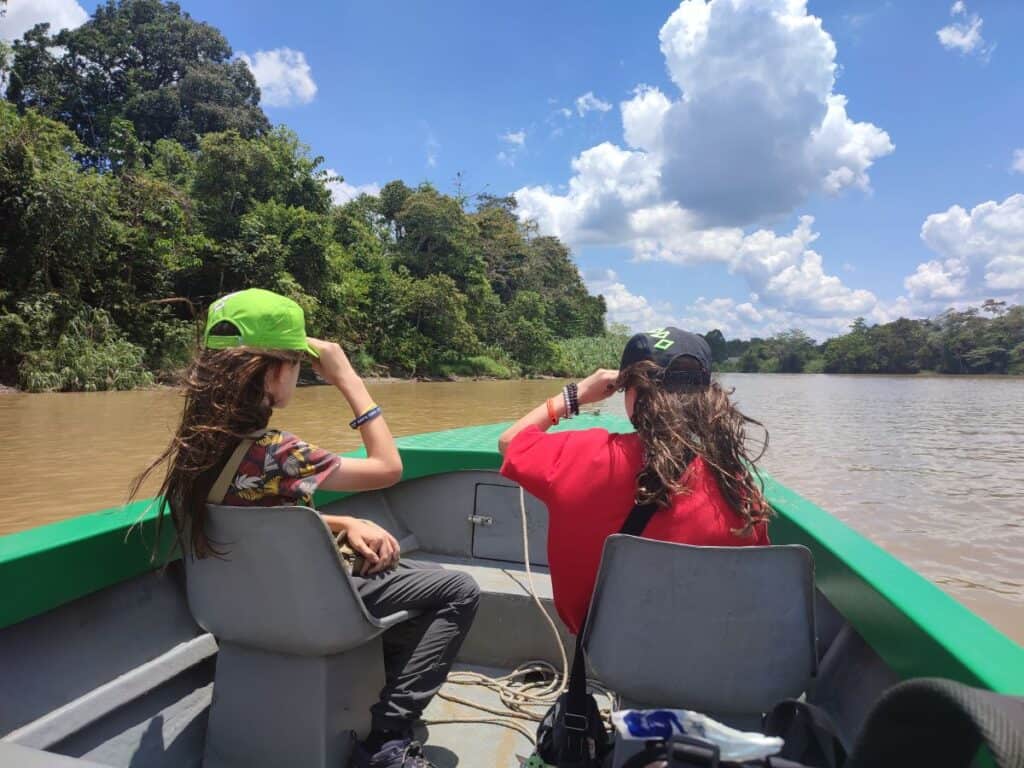
We tried hard to find destinations that were both affordable and highly educational for the boys. As they also love wildlife, most of our favourite places delivered on this too.
Overall our fave destinations for family gap year (or just adventurous family travel) have been:
- Costa Rica
- Borneo
- Indonesia
- Cambodia
- Ecuador (including Galapagos)
Plan Your Family Gap Year Itinerary
Now comes the exciting bit: starting to piece together your family gap year itinerary!
By this point you should have a rough idea of your budget, the kind of experiences you want to have, and which destinations might work for your family. You might even have a wishlist that is already getting a little out of hand (mine certainly did!).
But how do you turn all those ideas into an actual route? And how much of your family gap year should you plan and book in advance?
My biggest piece of advice is to plan the important things, but leave yourself plenty of flexibility. You want to have enough of a plan that you can make the most of your time and money, without locking yourself into an itinerary that becomes stressful to follow.
How far ahead should you plan a family gap year?
There is no one-size-fits-all answer to this. Some families like to have almost everything booked before they leave, while others prefer to make plans as they go. Personally, I think a balance of the two works best.
The trick is to work out which parts of your family gap year itinerary really do need advance planning, and which bits you can leave until later.
Things worth planning well in advance:
- Your overall budget and how much you need to save
- Long-haul flights, particularly if you have specific dates you need to work around
- Any must-do experiences that need to be booked ahead
- International school enrolments or worldschooling hubs you want to attend
- Visas, passports, insurance and vaccinations
- Destinations you need to visit at a particular time of year
For us, the boys wanting to be back in the UK for Christmas was one of the things that dictated our route. We also wanted them to attend an international school in Bali, so we needed to factor that into our plans.
These were the kinds of things that made sense to organise in advance.
Other things, such as exactly how long to spend in each destination, which smaller places to visit and what to do every day, were much easier to decide once we were on the road.
I’d also recommend researching any worldschooling hubs or communities that might fit with your plans before you leave. I had no idea how many of these existed when we started planning our year, and I really wish I’d built more of them into our itinerary from the beginning.
Don’t plan every day of your family gap year
If you’re a natural planner (like me!) then it is very tempting to map out the whole year ahead. And get everything booked and figured out.
But this was one of the big lessons I learnt from our family gap year: you don’t need to have absolutely everything mapped out and booked before you leave. In fact, that in itself is a nearly impossible feat of organisation!
Leave some flex in there to give you time to figure out which places you love and where you might want to spend more time. You’ll fall in love with some places, people you meet will recommend others, and things like worldschool hubs will pop up along the way that you might want to go to.
We missed out on two worldschooling hubs that we would have loved to attend. We’d met families at earlier hubs who were planning to go, but I’d already pre-booked our international flights and we didn’t feel we could adapt our plans.
If I were planning our year again, I’d definitely leave more room for these kinds of opportunities.
One way to get a bit of reassurance without committing yourself to a rigid itinerary is to book accommodation that allows free cancellation, where the terms suit your plans. This means you have somewhere to stay and can budget more accurately, but still have the option to change things if your plans evolve.
Just make sure you check the cancellation deadlines and conditions carefully, as not every booking will be flexible.
How to plan a gap year with kids without exhausting everyone
If you’ve backpacked around solo, or with your partner or friends before having kids, the likelihood is that you were able to move at a reasonable pace and cram in loads of countries and experiences.
That same thing doesn’t really work with kids.
For every epic experience and cultural highlight, the whole family is definitely going to need some downtime to recover and reflect. Pool days, afternoons spent reading, visiting the local playgrounds, chilling on the beach… these are some of the best bits of family time and are still important on a family gap year.
If you try to jump from place to place, you will quickly find yourselves exhausted. And nobody wants to hang out with tired, miserable kids!
When you’re mapping out your gap year travel itinerary, think about the travel days as well as the time you’ll spend in each destination. A journey that looks perfectly manageable on a map might be a whole lot more tiring in reality, especially when you’re juggling luggage, children, connections and unfamiliar transport.
If you’ve got long travel days planned in (and you will need some of these along the way), factor in an extra day afterwards for everyone to recover. Don’t plan to arrive somewhere late at night and then head straight out sightseeing the following morning.
We learnt this the hard way. I massively underestimated travel distances in Southeast Asia, and some journeys that I thought would be totally fine by bus or train ended up being too much with the kids. We ended up booking flights for some legs instead, which pushed our travel costs over budget.
And whilst sticking to a routine is much more challenging on the road, simple things like carving out enough time for card games and reading really helped us as a family to stay connected, chat about our day and settle down before bed.
Ultimately, the aim isn’t to tick off as many countries, museums and monuments as possible. It’s to actually enjoy experiencing them with your kids.
My advice? Start with the places and experiences that matter most to you, work out a realistic route between them, and then leave yourself some breathing space. You can always add more along the way, but it’s much harder to enjoy your family gap year if you’re constantly rushing to the next place.

Slow Travel with Kids: What We Learned
Before we set off on our family gap year, I thought I’d done a pretty good job of planning a realistic route. I’d already cut down a much longer wishlist and narrowed it to twelve countries across the year. Surely that was manageable?
As it turned out, not quite.
Why we needed to slow down
One of the biggest lessons from our gap year travel with kids was that the places we loved most were usually the ones where we stayed for at least two weeks, and often much longer.
Staying put meant we could settle into a place rather than constantly figuring out where we were, what we were doing next and how we were going to get there. We had time to explore, find our favourite places to eat and enjoy ordinary family days alongside the big adventures.
It also meant less packing and unpacking. Even though we’d deliberately tried not to move around too quickly, I still felt as though I was constantly sorting bags and getting everyone ready for the next journey. Every hour spent packing felt like time we could have spent enjoying our trip instead.
Whilst it’s a lovely idea to give your kids responsibility for doing their own packing, it isn’t always feasible. Which means that you might well end up packing ALL the bags. Ask yourself: do you really want to do this every couple of days on your trip?
There are financial benefits, too. Longer stays can sometimes mean cheaper accommodation rates, and having time to find local supermarkets and affordable places to eat can help keep costs down. Those savings aren’t guaranteed everywhere, but they’re worth factoring into your plans.
The point when we realised we’d travelled too fast
By the time we reached Vietnam, we’d spent six weeks travelling around Southeast Asia, and we were all exhausted. My original plans involved seeing pretty much the whole country, but we simply didn’t have the energy for another round of journeys and new destinations.
Instead, we spent three weeks on Phu Quoc Island, giving ourselves time to decompress and catch up on some schoolwork. Hoi An, Hanoi and Ha Long Bay came off the itinerary.
I was disappointed to miss places I’d been excited about visiting, but looking back, it was absolutely the right decision. There wouldn’t have been much point in dragging an exhausted family around more of Vietnam just to say we’d been there.
If I were planning our family gap year again, I’d put fewer places on the wishlist and give ourselves longer in the ones that mattered most. I’d also think carefully about how much energy each journey would take, not just how long it looked on a map.
You don’t have to see everything in a year. Choose the experiences that matter most to your family, allow enough time to enjoy them, and remember that a slower trip can be just as full of adventure.

Our Family Gap Year Itinerary
After a HUGE amount of debate and planning, we ended up with a slightly bizarre route for our family gap year itinerary. Which from the outside probably didn’t make a lot of sense to other people. But for us it worked.
Where we went
We started our family gap year at the end of September. We’d decided to break our travels down in to three separate legs:
September-December: Mexico & Costa Rica
January-July: Singapore, Malaysia, Indonesia, Malaysian Borneo, Thailand, Cambodia & Vietnam
July-September: UK (one week), Netherlands, Germany, Austria & France
How long we stayed in each place
We had at least several weeks in each place, with the exception of Singapore, Austria and the Netherlands.
Apart from a few exceptions (airport hotels when necessary for example) my minimum stay anywhere was 3 nights. Anything less than this just felt like we were constantly packing and repacking and not really getting to know the place we were in.
Why we chose our route
Our family gap year itinerary was very unique to us, based on conversations with the whole family.
One of the non-negotiables was that the kids wanted to be home in the UK for Christmas. This dictated how we mapped out our route; we headed to Central America first then back through the UK for a week at Christmas to give them that festive cheer with our wider family.
From January-July we were in South East Asia; being in one region meant we could move slower and this was where we knew our budget could stretch the furthest. We’d also found the international school in Bali that we wanted the boys to attend, so we built the itinerary out from there.
Back home in the UK we own a campervan and I wanted to incorporate this into our travels, so in July we headed back to the UK, picked up the van, said hello to family and friends then headed off to Europe. We all love music festivals and this also allowed us to add a couple to the itinerary over the Summer.
Whilst I would say that this is a slightly unconventional route for a family gap year, my point is that you can completely shape your travels to suit your own family’s needs. We wanted to be in Mexico for Day of the Dead, the boys wanted to see as much nature as possible (hence Komodo in Indonesia, Borneo and Costa Rica), we wanted Christmas in the UK and we wanted to be able to use the campervan.
These various bits added up to help us build our dream itinerary together.
What we’d change if we did it again
If I had my planning time all over again, the main things I would change would be to book less flights in advance. I didn’t really find the worldschooling community before we left so had no idea how much more fun exploring could be with other families. If I was to plan the year again I would build at least some of our travel around worldschool hubs and communities.
Travelling just as a four was so much fun, but the boys definitely needed regular contact with other kids. Which can be challenging on the road. As soon as we’d been to our first worldschool hub I knew we wanted to do more but were limited by our advance flight bookings.
Other Family Gap Year Ideas
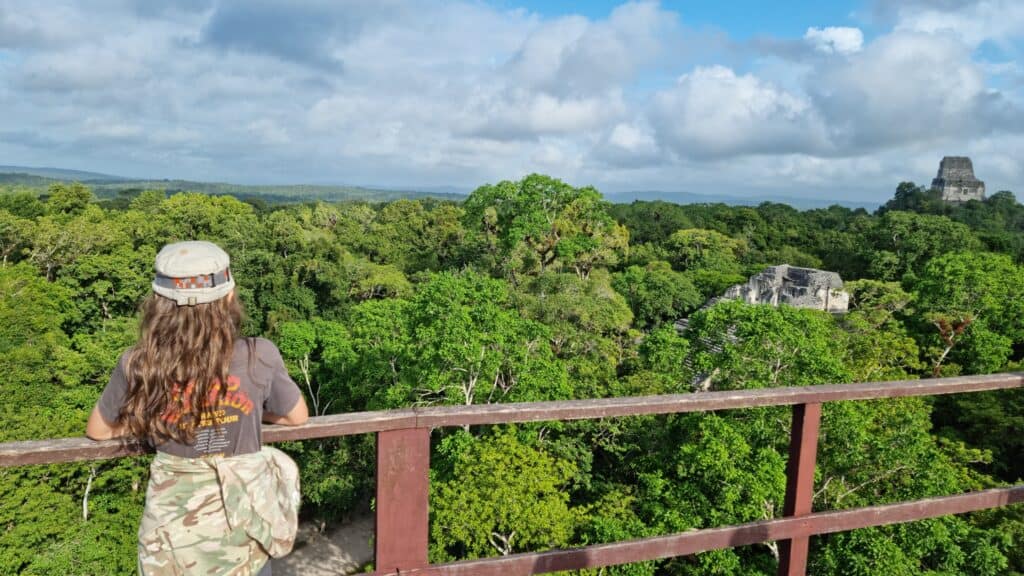
Your family gap year doesn’t have to look like ours. There are plenty of ways to spend a year away, depending on your budget, your children’s ages and what you want to get out of the experience.
- Explore one region: Instead of travelling around the world, focus on one area, such as Southeast Asia or Central America, and get to know it more deeply.
- Live in one country: Rent a home for a few months and experience everyday life somewhere new, rather than constantly moving between destinations.
- Combine travel with international schooling: Settle in one place for a term so your children can attend a local or international school while you explore the surrounding area.
- Follow a particular interest: Build your trip around wildlife, hiking, history, food or learning a language, choosing destinations that bring that interest to life.
- Spend time at a worldschooling hub: Join other travelling families for a few weeks, giving your children opportunities to make friends and learn alongside other kids.
- Travel by cruise: A worldschooling cruise or repositioning cruise could offer a different way to cover long distances, with less frequent packing and unpacking.
- Follow the seasons: Plan your route around the climate and activities you want to experience, whether that’s wildlife watching, hiking or spending time by the sea.
There’s no single right way to plan a family gap year. Think about what your family wants from the experience, then build a trip around that rather than trying to fit in everything.
The Family Gap Year Decisions I Would Make Differently
We had the time of our lives on our family gap year. It was undoubtedly the very best thing we have ever done. But there are still some decisions I would make differently, and some advice I would give myself if I was back there at the start of the planning journey.
What surprised us
Just how much the boys learnt without formal education. I knew they would learn from experiences but the things they saw, learnt and experienced first-hand have really stayed with them.
I fretted for a very long time about their education while we were away. If I had my time again I would go back and give myself a good shake and some firm reassurance that things WILL be OK!
What we spent too much money on
Credit card fees and roaming charges. This was one admin aspect that I really hadn’t put enough thought in to before we left. And the charges REALLY added up over our first month of travelling before we got a grip on them. We were lucky that our Christmas return to the UK allowed us to swap phones for ones that had eSIMS and open current accounts that allowed fee free payments and withdrawals overseas.
What we wish we’d planned earlier
100% worldschooling hubs. I didn’t even know they existed before we left on our family gap year and once we’d discovered them I really wanted to do more. We found that in regions like South East Asia the same families would attend several hubs in a row in different places; I really wish we could have done more of this as the kids had made friends that they wanted to keep travelling with.
What the kids thought
Overall, they loved it. They knew they were doing something out of the ordinary and they really relished the time away as a family. They became even closer as siblings (they had to share a bed most of the time!) and have a whole world of shared memories to look back on.
But they would also tell you that the bits they really loved were all either wildlife moments or time spent at worldschool hubs with other kids. They have firm friends that they are still in touch with that they bonded with at hubs and in worldschooling communities.
Our Top Tips for Planning a Family Gap Year
So, to try and summarise this gigantic amount of information I’ve thrown at you, these would be my absolute top tips if you’re just starting to think about planning a family gap year.
Involve everyone in the planning
Talk to your kids about the year away and what they might want to do. Even at a young age kids might have some unexpected ideas that end up forming part of your plans.
We allowed our boys to choose one place they wanted to visit each or one activity they really wanted to do. Which took us all the way to Komodo National Park to see the dragons and into the temples of Angkor Wat. Both things we might not have done otherwise.
Leave room for the unexpected
Build in at least some flexibility. Some of our fave places (Bali, Austria) were NOT the places I expected to fall in love with and want to spend more time in. And some of the best experiences are the ones you stumble upon (or have never heard of before you arrive!)
Don’t try to make the year perfect
Manage your own expectations about how dreamy a family gap year will be. One thing I can 100% promise is that your kids will still argue, complain, dislike things you think are brilliant and generally be just as tired and irritable sometimes as they are at home. Family life on the road is still family life.
In my case the biggest example of this was sunsets. Turns out my boys find them totally boring and rubbish, so there were absolutely no picture perfect family sunset moments on our trip!
Plan the important things and leave the rest flexible
Decide on the unmissable things and work from there. Map out how you might get to your key destinations, plan a detailed budget, book the long-haul flights, buy your insurance and check your visas and vaccinations – then let some of the rest of the travel just happen more naturally as you go.
Ready to Plan Your Family Gap Year?
If you’ve made it this far, then hopefully you’re starting to see that planning a family gap year is a whole lot more manageable than it might have seemed at the start.
I know just how overwhelming it can feel when you first start thinking about taking a year away with your kids. There are SO many things to consider, from money and work to schooling, healthcare and where on earth you’re going to go.
And it can be very tempting to get completely carried away with the fun stuff (hello, endless destination wishlists and Pinterest boards!) before you’ve worked through some of the bigger decisions.
But here’s the thing: you don’t need to have every detail figured out before you decide to go.
You don’t need a perfect itinerary, a fully mapped-out year or answers to every single question before you start making progress. You just need to work through the important decisions in the right order, so that you can start turning the idea into something that might actually be possible for your family.
For us, the planning process was a huge learning curve. We got plenty right, but there are definitely things I’d approach differently if I were starting again. I hope sharing our experience helps you avoid some of the mistakes we made and gives you the confidence to start working towards your own family gap year.
Start planning your family gap year with my free checklist
If you’re feeling a little overwhelmed by all the decisions ahead, I’ve put together a free family gap year planning checklist to help you get started.
It will help you work through the key decisions you need to make first, from thinking about your priorities and budget to considering work, schooling and destinations.
Rather than trying to figure everything out at once, you can use it to break the process down into manageable steps and start making progress at your own pace.
Download your free family gap year planning checklist and take the first step towards making your own adventure happen.
Because if there’s one thing I’ve learnt from our experience, it’s that you don’t have to be a full-time travelling family or have a bottomless pot of money to make this possible. You just need to work out what matters to your family, what you can realistically afford, and how to make it work for you.
Looking for even more planning info?
We have specific posts on different aspects of planning a family gap year, plus destination specific info for some of our fave places.
- What is worldschooling?
- How to deregister your kids from school in the UK
- Our exact family gap year costs
- Budgeting for a family gap year
- Enrolling our kids in international school
- Costa Rica Family Travel
- Malaysia Family Travel
- Mexico Family Travel
- Bali Family Travel
- Our total spend in Costa Rica
- How much we spent in Bali


